
Torbay Civic Society
Barn CloseIsambard Kingdom Brunel as the Good Employer
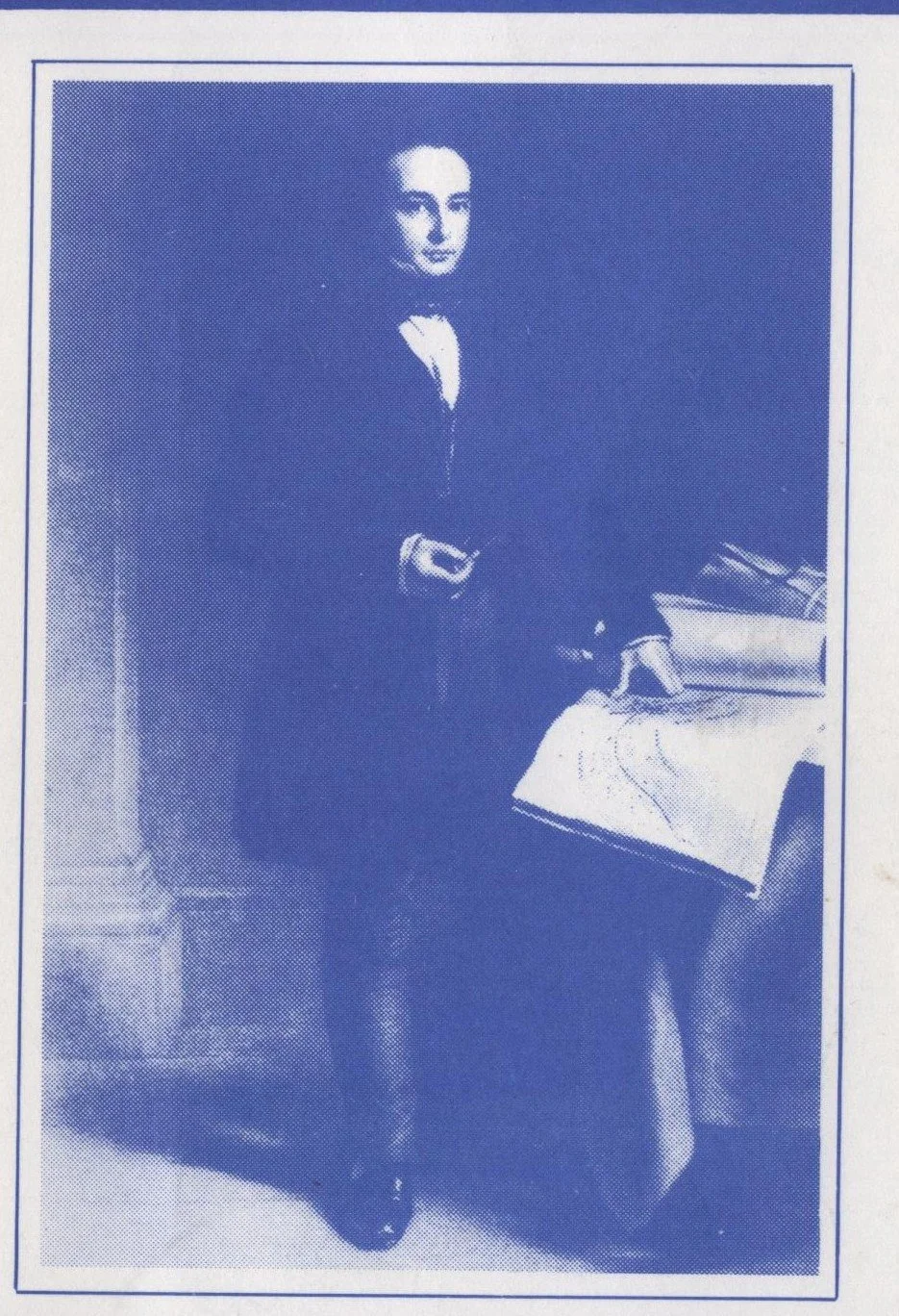
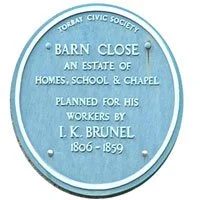
When Isambard Kingdom Brunel died in 1859, aged only 53, a national Memorial Fund was established, supported by Brunel’s personal friends and by the rich and famous. Here in Torquay a separate local fund was set up to commemorate the part Brunel had played in the life of the community. There were big donors, of course, but the local paper, the Torquay Directory, commented “.... doubtless many of the humbler classes, who have experienced Mr. Brunel’s generosity, will be glad to give their mite....” Among them would have been Brunel’s gardeners and estate workers, living at Barton in the homes he built for them.
It says much about Brunel that he built houses for his workers long before he began to build one for himself. And these houses at Barton are unique, at least for Torquay. At the time they were built virtually nothing had been done to house the workers putting up the great villas on the Lincombes and the Warberries. Most of them slept in common lodging houses, in the attics of beer houses, anywhere they could find space, crowded into the slums of George Street, Swan Street, Madrepore and Pimlico.
Not that housing was the only problem of the working people of the time. Brunel must have been very familiar with the hardships endured by the squads of casual labourers who built his railways.
These years, when Brunel came with his railway to Torquay, were known as the ‘Hungry Forties’. All corn coming into the country was heavily taxed, the home harvest had been poor and bread was the staple diet of working people. Many were brought to the verge of starvation. In 1847 there were bread riots in Torquay and in many of the towns and villages round Exeter. In Torquay alone over 130 men were imprisoned or transported to Australia. The navvies working on the railways were among those most heavily sentenced.
It was against a background such as this that Brunel built houses for his workers before he built a house for himself. In Swindon he had built a railway village. His interest in what was called artisan housing had been in evidence at the time of the Great Exhibition in 1851. Prince Albert had taken the lead in making ‘Model Housing’ a major theme of the Exhibition, and Brunel himself had been closely involved.
At first he refused to take any payment for this work, but he then decided to accept the money and use it to pay for the small housing scheme for his Estate workers that our plaque commemorates.
On 29th March 1852, he purchased a field called Barn Close for the sum of £250. It was rather less than two acres in extent and in the rather awkward shape of a half circle. But Brunel turned this to advantage by building the houses in a crescent. Along the crescent he planned ten semi-detached cottages, very large by the standards of the time and almost certainly designed by Brunel himself. His sketch books contain several cottage designs. His early death is perhaps the reason why only two pairs were built. Nearly a century and a half later they make very acceptable homes.
Brunel and his wife Mary showed a real concern for the welfare of their workers and for the education of their children. A newspaper report of 1853 describes a lavish party which the Brunels laid on for their estate workers, including 70 children “from the school at Barton, which their truly generous lady had established for the education of the infants of the poor”. They were shown round the estate, enjoyed races, football and various amusements and were fed with tarts and buns. (The grown-ups turned up later and set to work on the serious eating, together with the consumption of a plentiful supply of ‘Dublin stout and Devonshire cider’.)
As the numbers attending the school at Barton grew Brunel decided that it should be housed in a permanent and properly designed building. Since the village lay at some distance from the parish church at St. Marychurch he decided to design a building that would serve both as school and chapel.
But for various reasons there were delays and it was not until 1875, 16 years after his death, that his two sons, Isambard and Henry, brought the scheme to fulfilment. They purchased the land from the family trust and put up a building which in all probability followed the designs drawn up by their father. They presented it to the Vicar and Churchwardens of St. Marychurch “for a school for the education of children and adults or children only of the labouring, manufacturing and other poor classes...” It stands to this day, adjacent to Church Road, but has long since been converted into two dwellings.
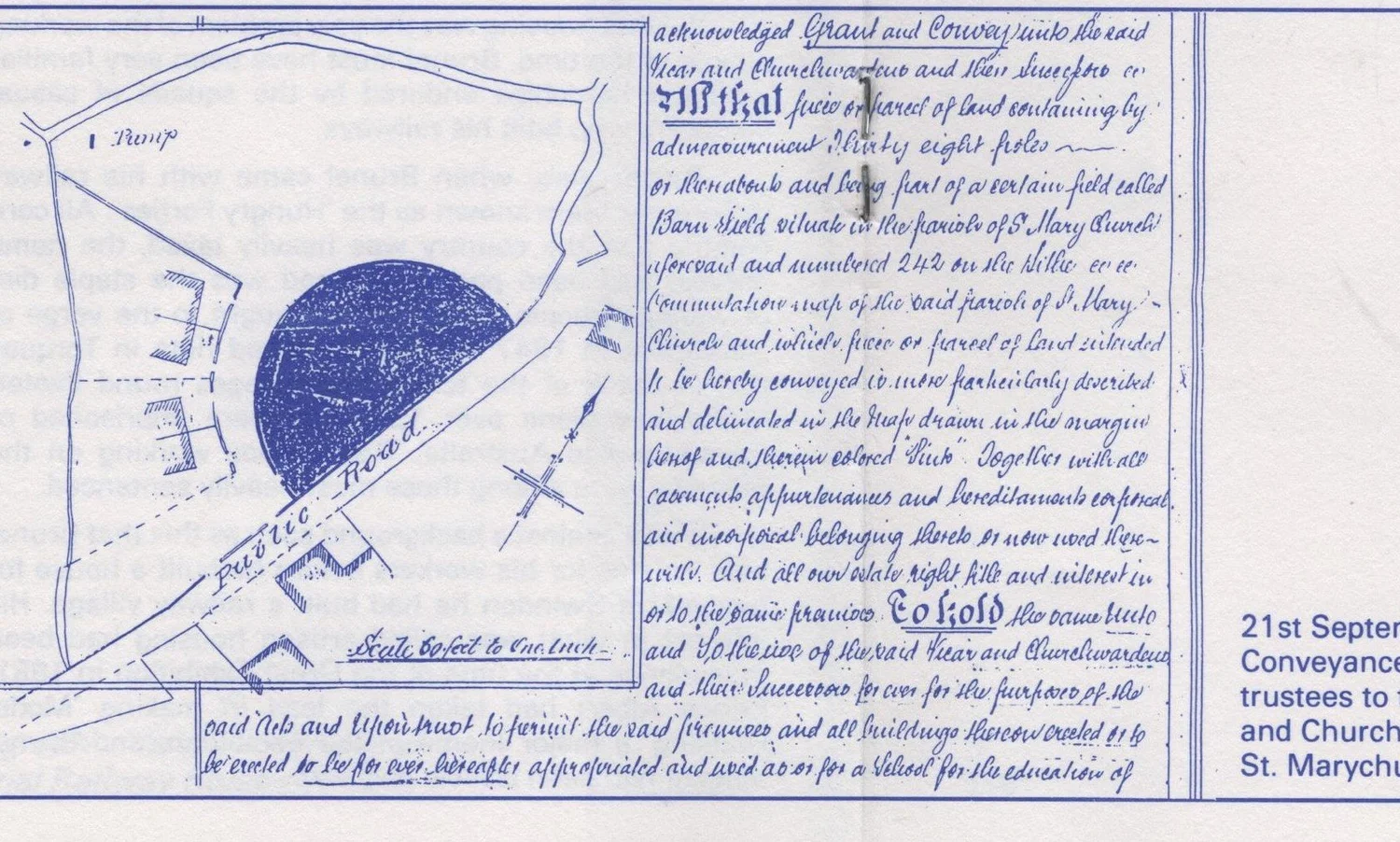
In September 1851, the year of the Great Exhibition, Brunel paid for all his estate workers to have a five day holiday in London. The local newspaper reported:
They occupied the bodies of two carriages and started in high spirits. They were met by a guide at the Paddington terminus and conducted to the Crystal Palace, the British Museum, the Thames Tunnel, and the other Lions of London.... the whole of their expenses were defrayed by their kind employer, and their weekly wages paid as if they had continued at work.
This is just one of the many examples of how Brunel regarded his workers — not as ‘hands’ but as human beings. One of the most touching examples of his concern was the very last letter he ever wrote, which he signed on 9th September, just six days before his death. It was a request that the railway workers at Swindon should be given special passes and time off so that they could visit the Great Eastern while it lay at Weymouth.
Just as the trees at Watcombe Park still mark his signature upon the landscape, so the houses, schoolroom and chapel at Barton testify to a man who not only worked great wonders but who thought about and cared for the men whose manual labour brought those wonders to fruition.
Research: Geoff Tudor
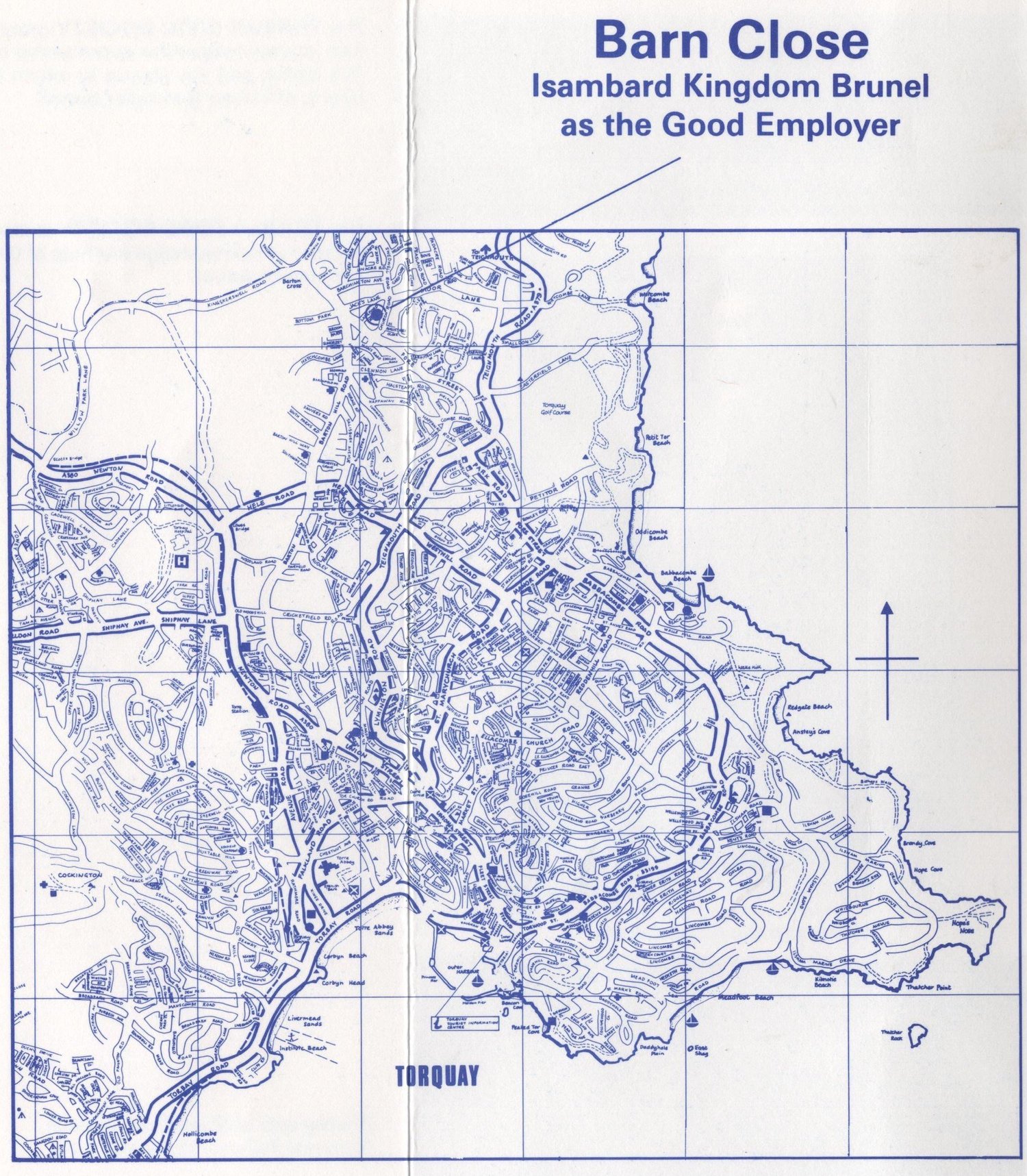
About this series
This leaflet, and the plaque, is one of a series commemorating notable people, buildings and events in the history of Torbay, prepared by the Torbay Civic Society.