
Torbay Civic Society
Torquay Museumand the Torquay Natural History Society
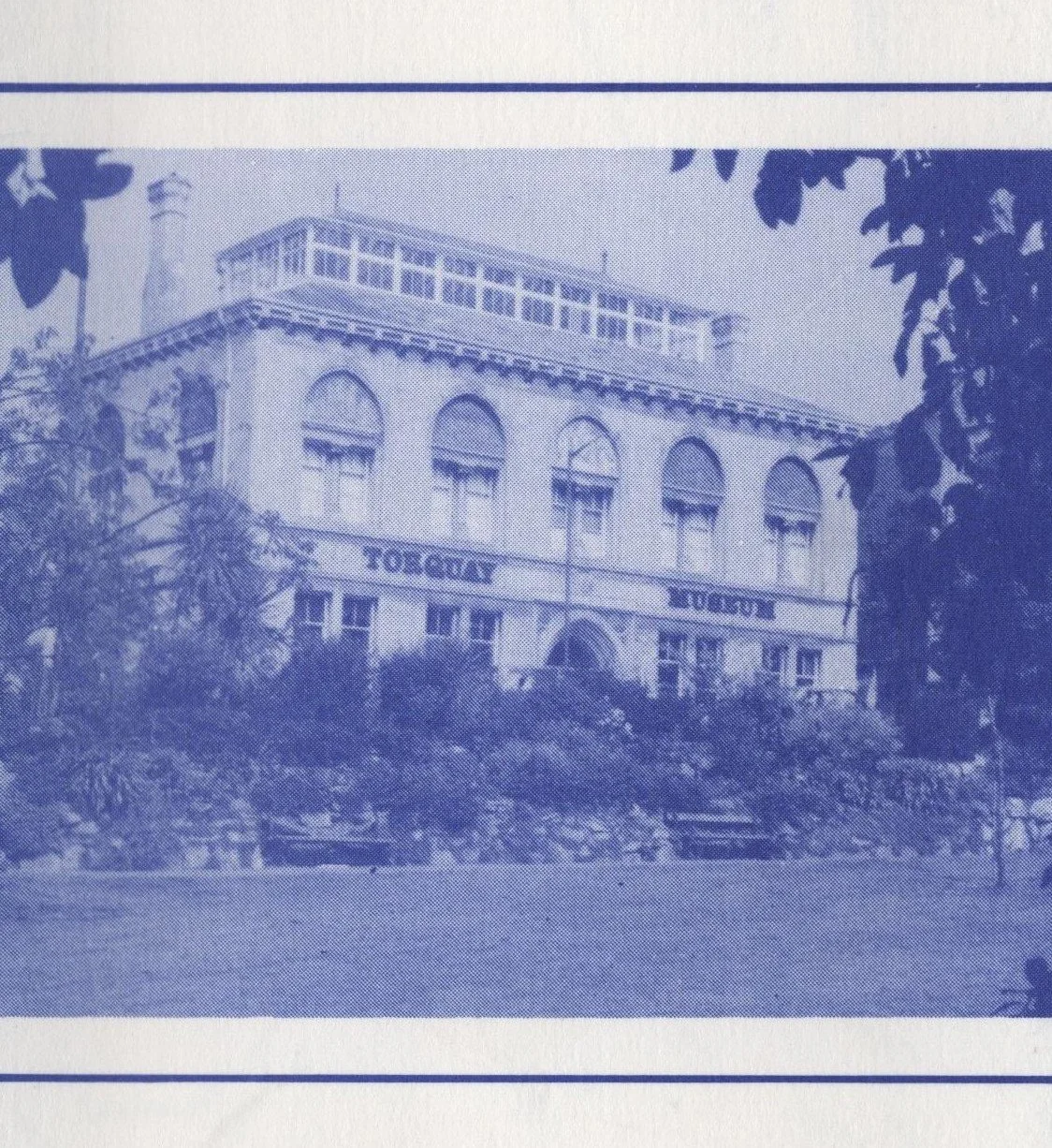
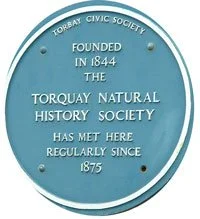
The Torquay Natural History Society was founded on 11th October 1844 when 18 gentlemen met in the home of Dr. R. Battersby in Meadfoot Road. Thirty years later the Society decided to build its own museum. Over 130 years have gone by since then and the Society is still meeting in that same building, which it still owns.
And the Society is flourishing.
It is actively engaged in an on-going programme to extend and enlarge the building and to improve and modernise the displays.
The collection is growing in range and importance and the Society is now able to exhibit a greater proportion of it, although it must be admitted that even this is still no more than four per cent.
Many of the collections are of international importance and attract scholars from far and wide.
The membership has recently reached record numbers, something in the neighbourhood of 600.
Torquay Museum is fully in line with the post-war trend throughout the world to make museums a living, vibrant part of the community. Its appeal is directed alike to residents and visitors and schoolchildren. The fusty, dusty, mausoleum image of the museum is a thing of the past.
In these days when privatisation is all the rage, Torquay has a museum which was never public, and which the Society hopes will never become public. And it never will if it continues to have the support of the community.
It does now get help from public funds, of course, from the Area Museum Council and Torbay Borough Council. But because the museum is private and is run with the help of a large body of volunteers, the Borough of Torbay has a museum which, if it were run on the rates, would cost ten times as much.
Thanks to a Society founded in the middle of the 19th century Torbay has one of the best small museums in the country and it has it for virtually nothing. We are sure the Borough Council will never come to think that because the Museum costs them so little it can only be of little value.
In those early days the study of Natural History was all the rage, rather like information technology is all the rage today. There are many reasons why it was very much the rage in Torquay.
First and foremost there were the caves. The most famous one is Kent’s Cavern, in those days known as Kent’s Hole. But there are other important ones in the locality, the Windmill Caves and others in Brixham and the caves in Buckfastleigh, Torbryan and Chudleigh. The pioneering work done here by Pengelly and many other members of the Society was to change the frontiers of our knowledge about ourselves and where we came from.
Then there is our remarkable coastline, with its small bays and rocky outcrops and pools where Philip Gosse pioneered the new science of marine biology.
A third factor was that Torquay, from the standpoint of the Geologist, is located in the middle of one of the most interesting parts of the world. The Torquay Natural History Society came into existence and flourished at a time when Torquay was playing a vital part in the scientific life of the country. In addition to the naturalists and physical scientists there was Scoresby, who invented the mariner’s compass; Paget Blake, whose journeyings as a ship’s doctor had given him a deep interest in the life and customs of primitive man; Froude, who did pioneering work on ship’s design; Babbage, who worked out the first primitive computer; to say nothing of such figures as Brunel and Heavyside.
The scientific controversies that rocked 19th century Britain left their mark on the Society. There was, for example, the controversy between the Darwinians and the anti-Darwinians. Passions ran high, especially when a Darwinian took the chair for a lecture by an anti-Darwinian, or vice-versa.
Eventually the Society passed a rule that when a lecture was to be given nobody was to be allowed on the platform but the lecturer himself. He wasn’t to be introduced, he wasn’t to be questioned, he wasn’t to be thanked. The danger of members striking each other with their umbrellas was in that way averted.
This rule has since been partially relaxed in practice, although it still remains in the statute book. The formality of the Tuesday morning lectures is preserved as a happy reminder of our long history.
The Society owed much of its early success and reputation to William Pengelly, whose work is fully recorded in the Civic Society leaflet on Kent’s Cavern. Suffice it to say here that he was 32 when the first meeting took place at the house of Dr. Battersby and that until his death some 50 years later he was active in the Society, for most of the time as Secretary or President.
His weekly lectures, which were reported word for word in the local paper, drew large audiences and were remarkable for their enthusiasm, their lucidity and their scholarship. His only rival on the lecture platform was his lifelong friend and fellow officer of the Society, Edward Vivian, the local banker, who also acted as Treasurer.
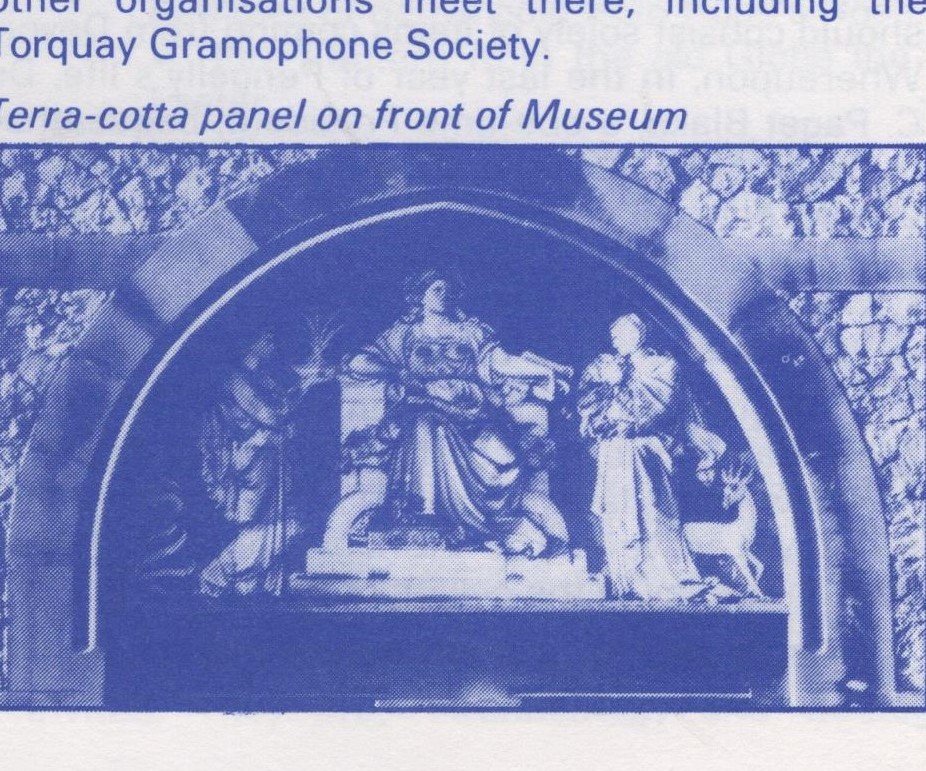
The Society honoured William Pengelly on his death by a memorial that could hardly have been more appropriate and which has certainly carried on his spirit and his message for future generations. The Pengelly Hall is used throughout the year for the weekly meetings of the Society, for its section meetings and for its summer exhibitions. Many other organisations meet there, including the Torquay Gramophone Society.
One of the first aims of the Society was to establish a library, a vital function when the cost of the average book was more than the price of two bottles of whiskey. In Torquay, which did not get its Public Library until 1906, it built up a general library of some 30,000 volumes. The Society is now tackling the difficult problem of finding a role for its library in the very different conditions of today.
One of the most familiar problems for any museum is to attract a steady stream of valuable objects to its collections and at the same time to be discriminating and consistent about what it accepts.
One example will illustrate what a dilemma this can sometimes be. At the insistence of William Pengelly it was initially ruled that the collection should consist solely of items coming from Devon. Whereupon, in the last year of Pengelly’s life, Dr. C. Paget Blake, a one-time President, bequeathed to the Society his large and valuable collection of ethnographical material, largely from the South Seas. After long and agonised discussion a Special General Meeting looked the gift horse very carefully in the mouth and decided it should be refused.
Whereupon the collection was offered to the Town Hall on the one condition that they displayed it. A few years later a relative came and searched the Town in vain. The Ethnographical Collection was on display in the cellars of the Town Hall.
Legal action was threatened. The Council turned to the Society. Would they be prepared to display it for a consideration of £75 a year? Yes, said the Museum, ever ready to help the Council and ever short of funds.
It was a wise decision, for the collection is still in the care of the Society and will be one of the prize exhibits in the new Archaeological and Ethnographical Gallery now being newly designed.
The story of its accessions makes interesting reading. An early curator, Mr. E. Burt, anxious to build up the Ornithological section, used to go out with his gun to bag exhibits. Being a taxidermist he then set to and stuffed them himself. In 1868 the museum accepted “a rat found dead in peculiar circumstances”. The rat has long since disappeared and the Society is not seeking a replacement.
The first gallery the visitor enters, the Holden Gallery, is given over to Natural History exhibits, and is a reminder of how the Museum began. But as the visitor proceeds on his tour he will see that the appeal of the Museum has been greatly widened. This is the result of a decision taken in the 1930’s, when the Museum began accepting gifts of coins, medals, ceramics and Victoriana.
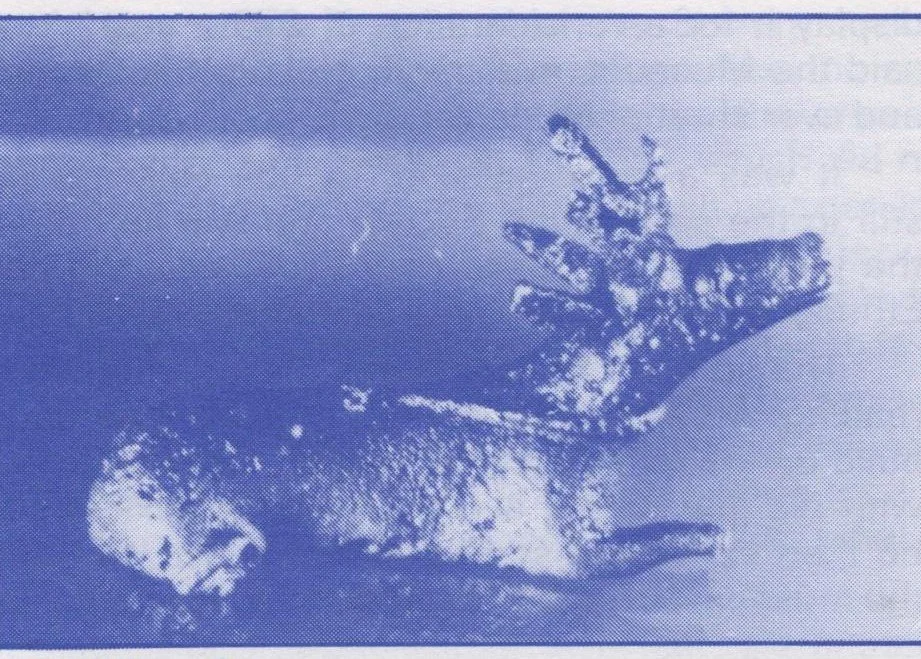
We might mention a few items to show the range of what is on display:
- The Village Stocks from Buckland Monachorum.
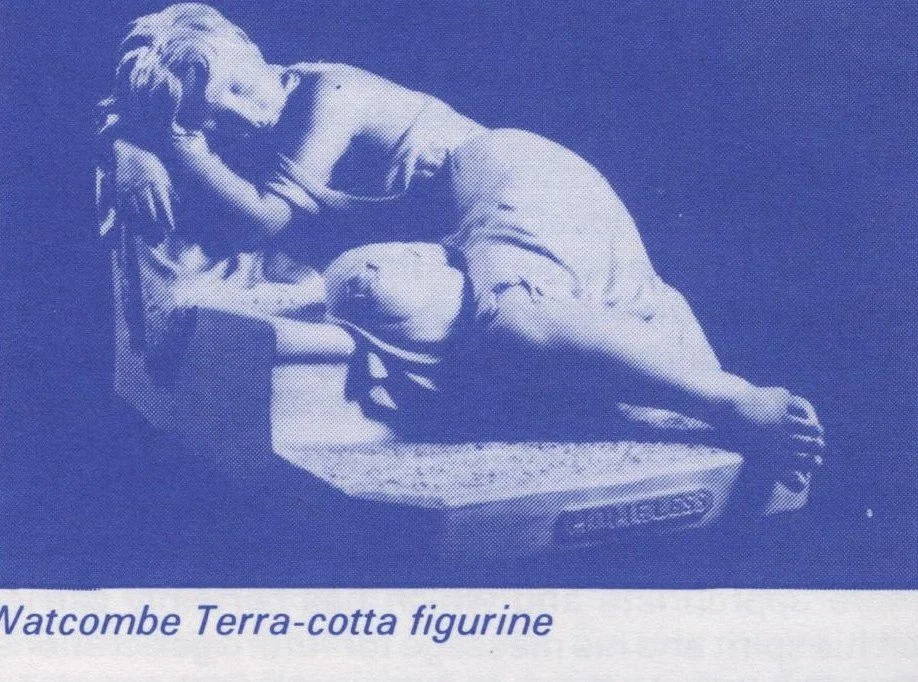
- Terra Cotta figures from Watcombe.
- A posy of feather flowers on show at the Great Exhibition of 1851.
- A clock belonging to Pope Pius IX.
- Samples of native gold from Hope’s Nose.
- A Horn Lantern from the old Globe Inn at Exeter.
- Locally made marble inlaid furniture.
- 16th century carved wooden figures from Waddeton Court, Stoke Gabriel.
- The mummy of a child of primary school age who lived 2,500 years ago.
To assist with the care of its new acquisitions, and reflecting its widening interests, the Society established sections, initially for entomology, photography, microscopy and botany. That its interests have now become wider is indicated by the current list of sections, all of which organise separate meetings to which the general public is invited. They are Archaeology and Geology, Astronomy and Space Sciences, Botany, Literature and the Arts, Ornithology, Pictorial Records, Rambles, and Zoology and Entomology.
Edward Vivian has been remembered in the new Vivian Gallery, given over to Victoriana. Other generous benefactors are similarly remembered. The Laycock Gallery houses a valuable collection of folk exhibits, including agricultural implements, farm equipment and cottage furniture. The Leach Gallery has on display a selection of the Society’s large collection of photographs of Old Torbay. It was also fortunate in obtaining very generous grants from the Carnegie Foundation, to which Torquay also owes its Public Library.
The present modernisation programme, and much of the work of establishing the new galleries, could not have been accomplished without the help of staff through the Manpower Services Commission.
There are many thousands of museums in Britain today, they form a vital part of our cultural and educational life, to say nothing of our tourist industry. But in 1850 you couldn’t have found more than 50 if you’d scoured the country from Land’s End to John O’Groats.
One of those 50 was the Museum in Torquay. We have something we can be proud of and something we should do all we can to maintain and develop.
Research: Dr. Norman Harris
The plaque
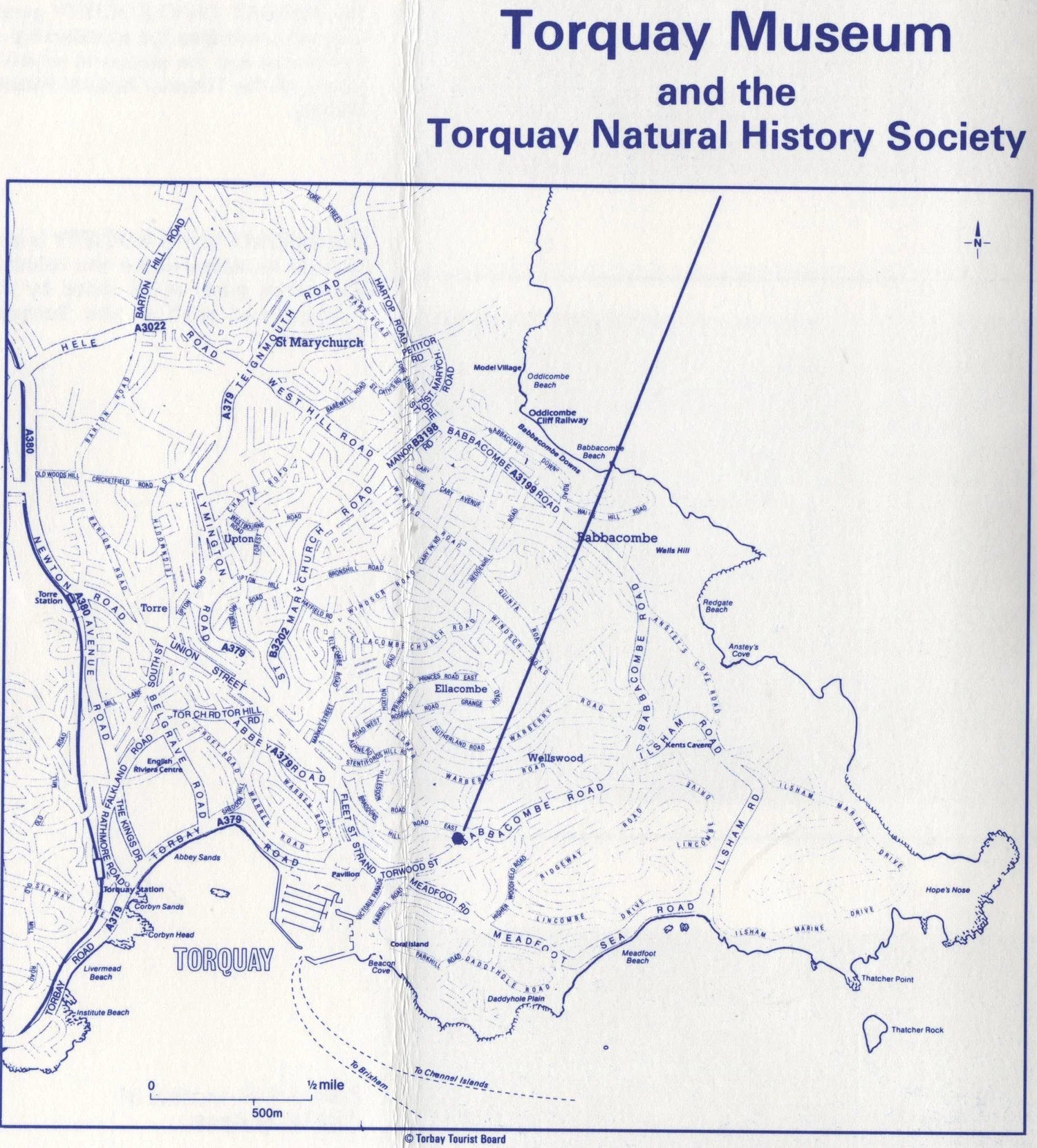
The plaque to which this leaflet refers is affixed to the front of the Torquay Museum.
How to get there
The Museum is a prominent and well-known building on the left hand side of Babbacombe Road 500 yards from Torquay Harbour. A number of Bayline bus services operate along Babbacombe Road.
Where to go for further information
Torquay Central Library. Torquay Museum (the Museum of the Torquay Natural History Society).
About this series
This leaflet, and the plaque, is one of a series commemorating notable people, buildings and events in the history of Torbay, prepared by the Torbay Civic Society.
The present series includes:
- Rev. H.F. Lyte and Berry Head House, Brixham
- The Old Clink, Paignton
- Herbert Whitley and Primley House, Paignton
- The Bijou Theatre, Paignton
- The Town Hall, St. Marychurch, Torquay
- The Vivian Institute, Torquay
- Baroness Burdett Coutts and Rosetor, Torquay
- Beverley Nichols and Cleave Court, Torquay
- Bishops Tower, Paignton
- The Spanish Barn, Torquay
- The Pavilion, Torquay
- Ilsham Chapel, Torquay
- Bishopstowe
- William Pengelly
- Isambard Kingdom Brunel
- Charles Kingsley and Livermead House Hotel, Torquay
- Torquay Museum
- J.C. Horsley and Orestone House Hotel, Torquay
- Elizabeth Barrett Browning and Regina Hotel, Torquay
- Ella Rowcroft and Rainbow, Torquay
- Isaac Merritt Singer and Oldway, Paignton
- Osborne and Hesketh Crescent, Torquay
- Torquay Market
The Torbay Civic Society gratefully acknowledges the sponsorship of this leaflet and the plaque to which it refers, of the Torquay Natural History Society, and the valuable assistance given at all times by the Curator and staff of the Torquay Museum. Photographs courtesy of Torquay Museum.
Series edited by Frank Cawson. Produced by Denis Walton.