
Torbay Civic Society
Elizabeth Barrett Browningand the Regina Hotel
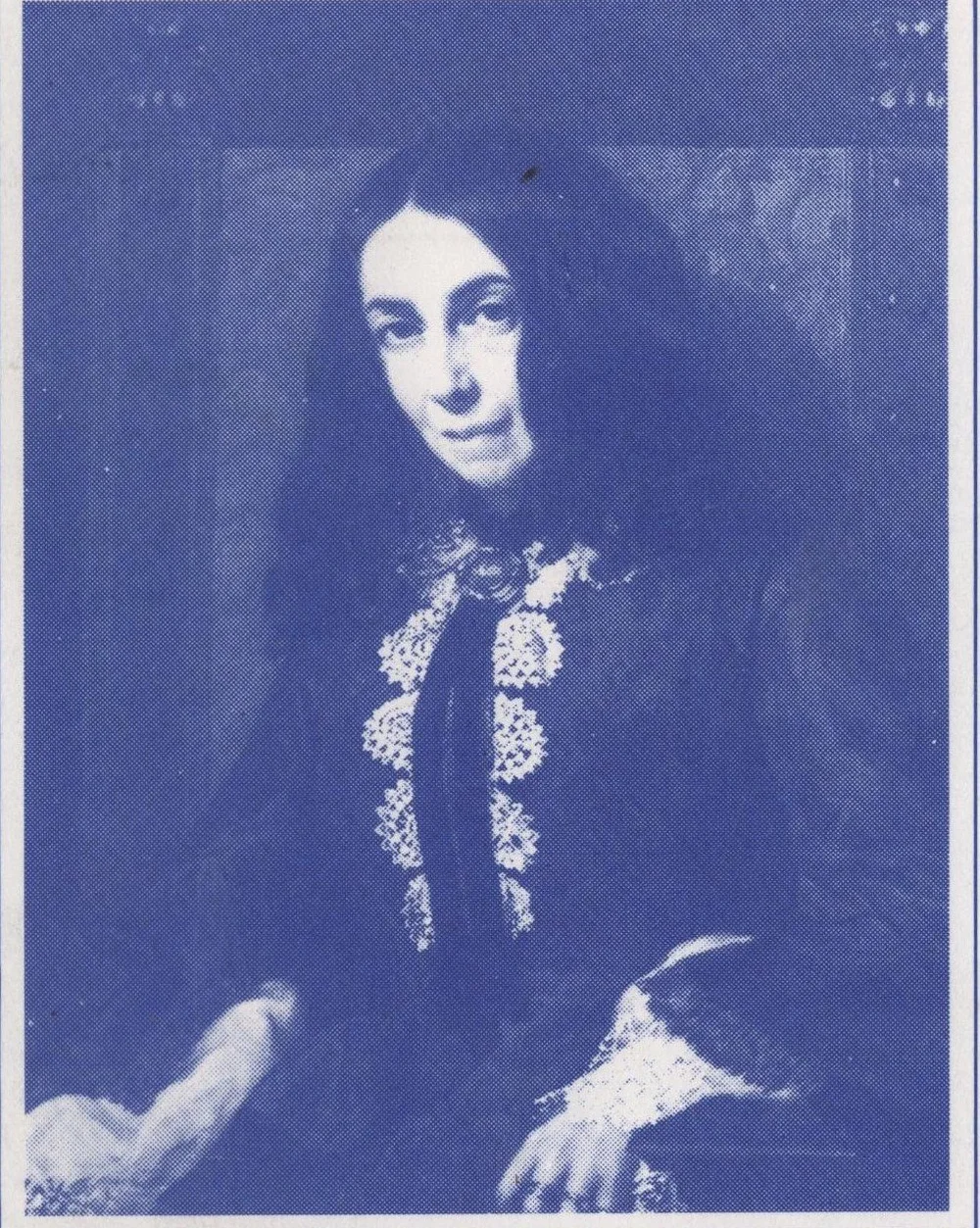
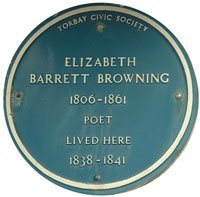
The Barretts of Wimpole Street gave a vivid account of Elizabeth Barrett Browning, her extraordinary family and her most romantic marriage. Elizabeth Barrett Browning was one of the most famous and popular poets of Victorian England, more highly regarded in her lifetime than her husband, the poet Robert Browning, and expected by many to succeed Alfred Tennyson as Poet Laureate. When she sailed into Torquay Harbour in 1838, with a sister and two brothers, she was a very sick young woman of 32, with seven years to go before she met the man she was to marry. The visit lasted for three years and was tragically unhappy.
She was the eldest of 12 children. They were a wealthy family, originally owners of sugar plantations in Jamaica. When she was only five her doting father rewarded her with a ten shilling note, addressed to ‘The Poet Laureat of Hope End’. When she was 14 he arranged for her epic poem The Battle of Marathon to be published privately.
The early happiness of her childhood was somewhat marred by a riding accident when she was 15. Her mother died a year later, her grief was such she was unable to leave the family house in Wimpole Street for six months. Tears and illness marked her early life, then came tears and happiness.
In London she moved in literary circles and her work was published in a few magazines. One of her friends was Mary Russell Mitford, who gave her a pet spaniel which she called Flush, and about which she wrote.
But of thee it shall be said
This dog watched beside a bed
Day and night unweary.
Watched within a curtained room
Where no sunbeam brake the gloom
Round the sick and dreary.
It was to recuperate from a serious illness brought about by a broken blood vessel that she came to Torquay, where she stayed first with an aunt in Braddons Hill and then at the Bath House, 1 Beacon Terrace, now the Regina Hotel.
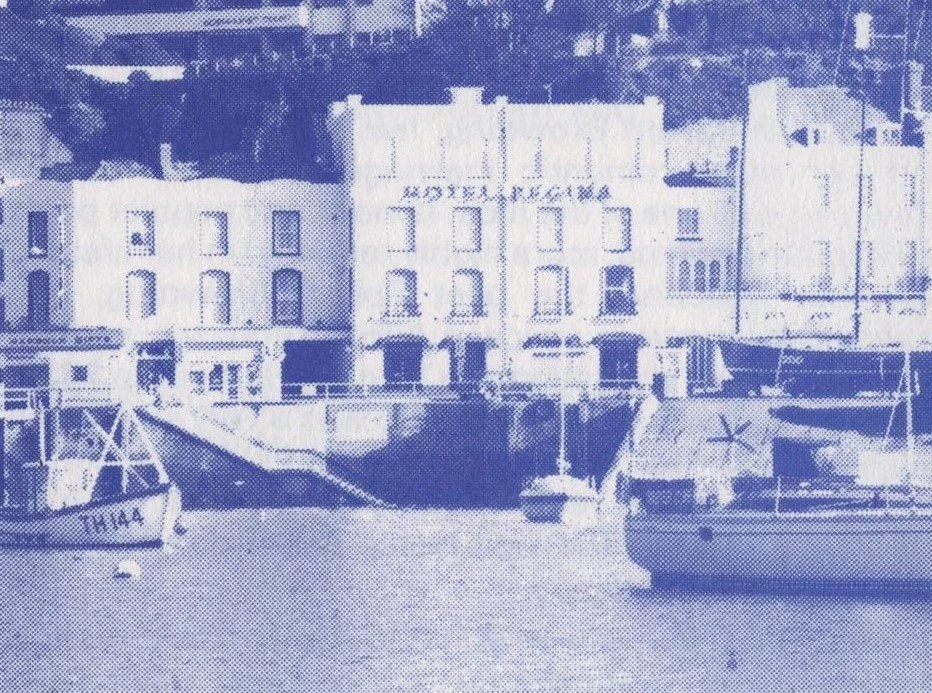
All the family came down to visit her, including father, now a widower, deeply devoted to his family but very much the despot. Elizabeth does not seem to have enjoyed her convalescence. In one letter she wrote that “whenever the steam packet leaves the harbour, or enters it, my bed is shaken by the vibrations”. Most of the time she stayed in her room. “I did most emphatically abominate and nauseate the going downstairs”, she wrote.
Nevertheless some poetry was written in Torquay, including one on the removal of Napoleon's ashes from St. Helena. She was very moved by the thought that “the Bellerophon lay on those very bay-waters opposite to my bed”, the Bellerophon which anchored off Berry Head when it was taking the defeated emperor into exile.
Eventually the doctors ruled that although she herself was not well enough to return, she was at least well enough to be left on her own. But she pleaded with her father to allow Edward, her favourite brother, to stay on with her, and this was agreed.
On 11th July 1850, Edward went with three young men and a boatman for a sailing expedition from Babbacombe on a boat called La Belle Sauvage. When several hours went by and he did not return the alarm was raised and Elizabeth heard to her greatest consternation that a yacht had foundered and all its occupants drowned. A reward of £50 was offered, but Elizabeth's worst fears were not to be confirmed till nearly four weeks later, when the body was found off Thatcher Rock.
Elizabeth's tears and illness can now be imagined, made the more painful by self-reproach. Had it not been for her pleading he would have returned to London and would be alive and well. Her illness now became acute, and it was not until September of the following year that she felt well enough to return to London.
But to return by sea was out of the question. And she certainly did not have the strength to brave the savage jolting of an ordinary coach. In the end a special ambulance coach was built for her and she lay on a stretcher suspended on a thousand springs. At every stop the stretcher was carried out with her recumbent on it. The journey lasted three days.
Three years after her return to London things took a remarkable turn for the better. In 1844 she published two volumes of poems that brought her much critical acclaim. They also brought her a letter from a little known young poet six years her junior. He spoke in the warmest terms of “her great, living poetry”. They corresponded, they met, and then Mr. Browning took to calling at Wimpole Street once every week. His visits seem to have had a medicinal effect, for now her health improves, she goes downstairs, she even ventures in her carriage as far as the East End to recover Flush who had been ‘dognapped’.
The difficulty was that her father ruled the family with a rod of iron, treated them as if they were children and positively refused to allow any of them to marry. When he came home one day and announced out of the blue that the whole family was moving into the country for several months, Robert Browning and Elizabeth decided something had to be done, and done quickly. On 12th September 1846 they were secretly married at St. Marylebone Parish Church. Elizabeth told nobody and returned home while Robert busied himself with making arrangements for them to travel across France towards his beloved Italy. It was a week of suspense that must have seemed an eternity. When her father eventually heard the news he disowned her, and was never to receive her again. The bride was 39 and the groom 33.
They settled in Florence, at the Casa Guidi, where she wrote Casa Guidi Windows on the theme of Italian liberation, and which was to be her home until she died 15 years later. After several miscarriages she gave birth to a son, whom they called Penini. It was the same year that saw the publication of her happiest poems, Sonnets from the Portuguese, which despite the title were original works, not translations. She was then 43.
From then on there were times of intense happiness. She published her long poem Aurora Leigh, she became very interested in French and Italian politics, and in spiritualism, and they travelled widely, making long visits to Paris, Rome and London.
Her life itself reads like a piece of romantic fiction, that is what makes it so extraordinary. What a story it is: a precocious childhood, a dangerous illness as a young child, the tragic loss of the mother and then the brother that she dearly loved, success as a writer, a passionate love match, a secret wedding, an exciting elopement and a long happy marriage. More than that, it was a marriage to a handsome young man who like herself wrote poetry about love.
What was it like, her marriage? She tells us in one of her sonnets:
What I do
And what I dream include thee, as the wine
Must taste of its own grapes. And when I sue
God for myself, He hears that name of thine,
And sees within my eyes the tears of two.
The poetic reputation of Elizabeth Barrett Browning has worn less well than that of her contemporaries. There have been several biographies, and much interest in her letters, but no major edition of her works has been published for over 50 years. She and Browning had a wide circle of friends among the most influential writers and thinkers of the age, by whom she was much loved and greatly admired for the breadth of her interests and the quality of her mind.
Her poetry shows a deep interest in the social problems and political issues of the day matched with unexpected insights and understanding of people. Her rhythms are unusual and original, and her language can be simple, passionate and direct. And it gives us the clue to her character. She was a woman of the greatest strength and integrity, who, like Florence Nightingale, was not above using tears and illness to get her own way in a male dominated society.
Here is a passage from Bianca Among the Nightingales where she talks of the woman who has stolen her husband's affections. A pyx, by the way, is a box into which gold coins are put for testing.
A worthless woman; mere cold clay
As a false things are: but so fair
She takes the breath of men away
Who gaze upon her unaware.
I would not play her larcenous tricks
To have her looks! She lied and stole,
And spat into my love's pure pyx
The rank saliva of her soul.
Research: 1988
The Plaque
The plaque to which this leaflet refers is affixed to the exterior of the Regina Hotel, Vaughan Parade, Torquay.
How To Get There
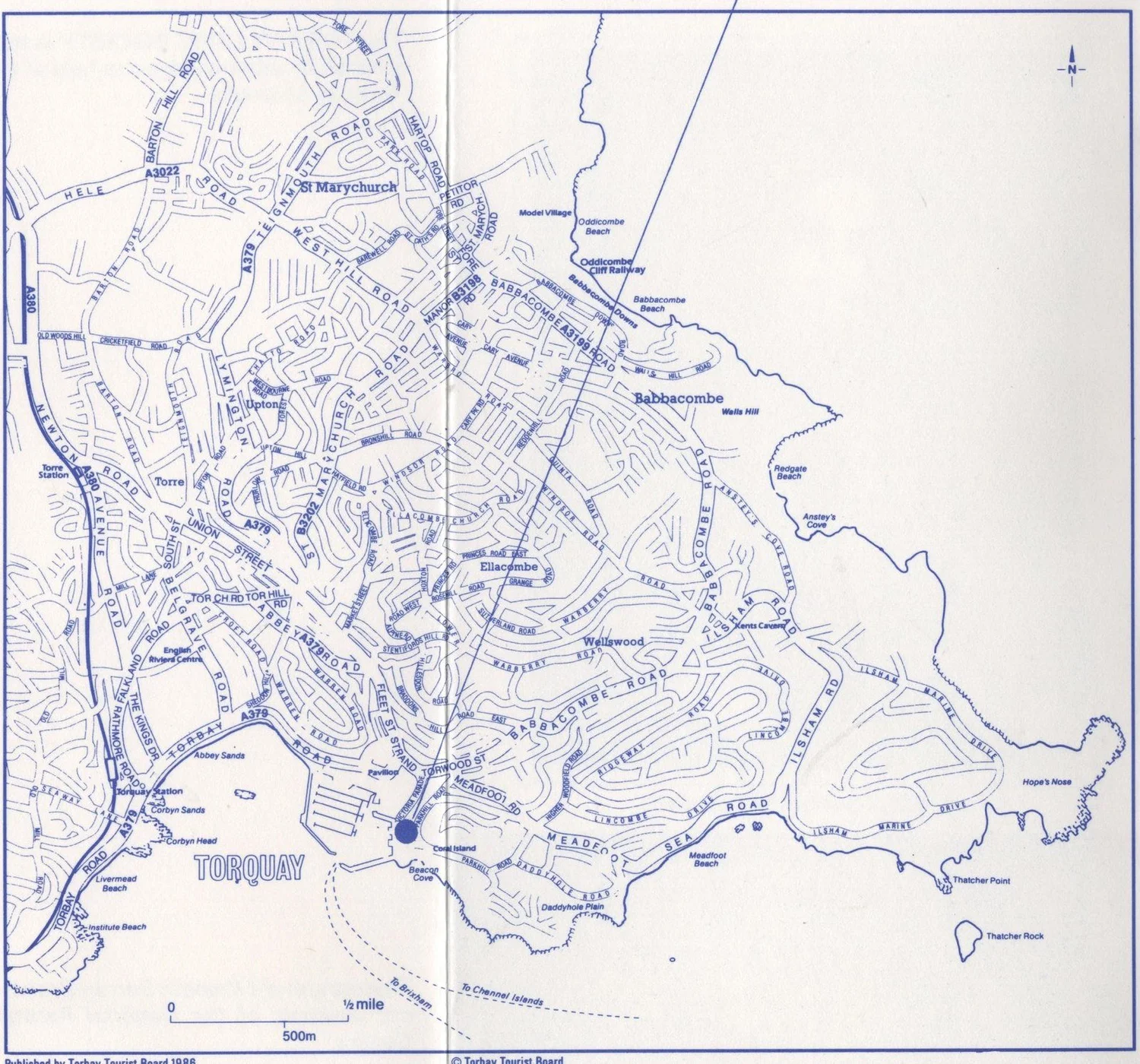
The Regina Hotel on Vaughan Parade is almost opposite Haldon Pier.
What To Read
Why not try reading the poems? They are in most anthologies.
- Drabble, Margaret, ed. The Oxford Companion to English Literature. Oxford.
- Hicks, Malcolm, ed. Elizabeth Barrett Browning: Selected Poems. Carcanet.
- Berridge, Elizabeth. The Barretts at Hope End. Murray.
- Mander, Rosalie. Mrs. Browning. Wiedenfeld & Nicholson.
- Transactions of the Devonshire Association.
Where To Go For Further Information
- Torquay Central Library
- Torquay Museum, the Museum of the Torquay Natural History Society
Acknowledgements
The Torbay Civic Society gratefully acknowledges the sponsorship of this leaflet, and of the plaque to which it refers, by the late Mr. Tom Cropper and his widow, Gladys. The Society is also pleased to acknowledge the help of Torquay Museum.
Photograph of Elizabeth Barrett Browning courtesy of the National Portrait Gallery.