
Torbay Civic Society
Charles Kingsleyand Livermead House
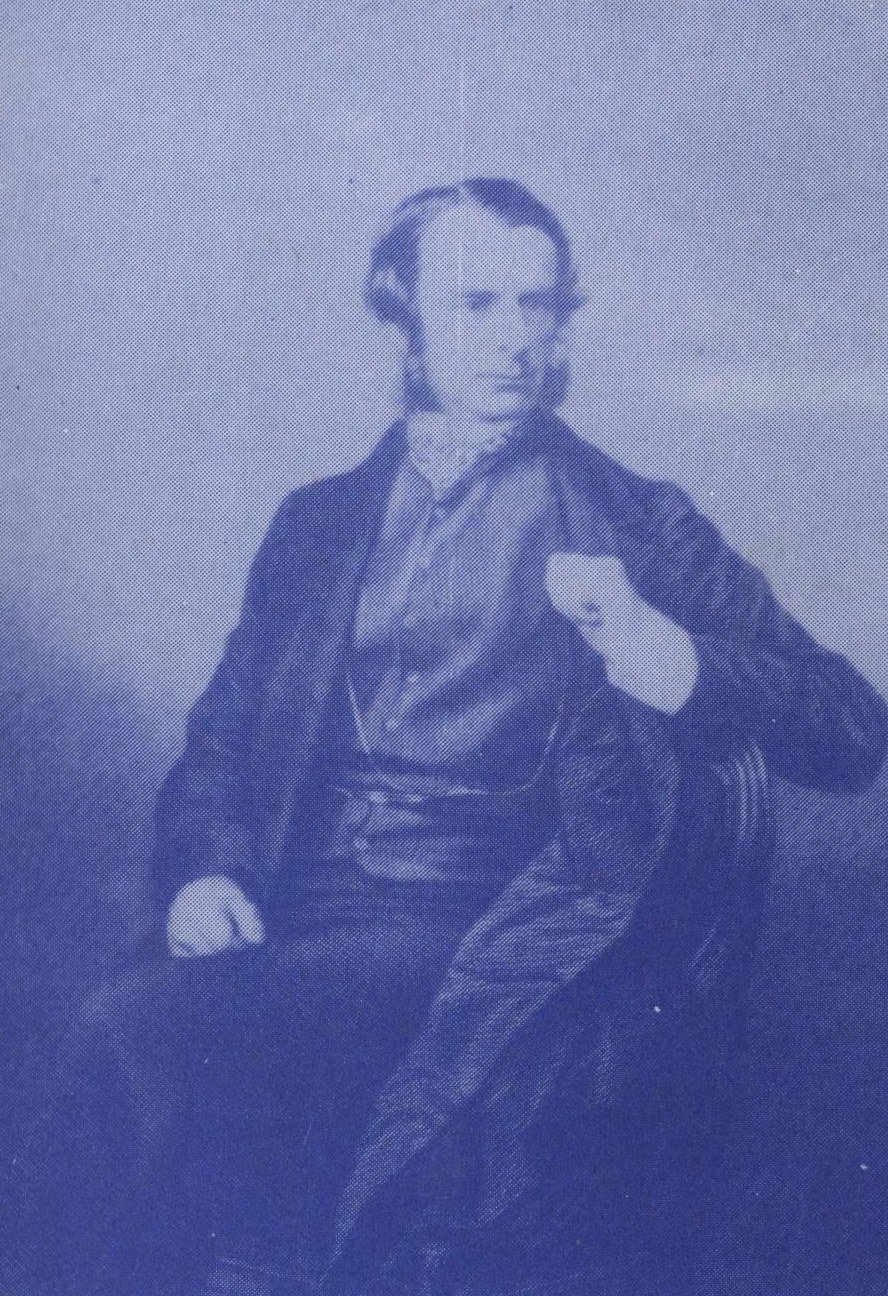
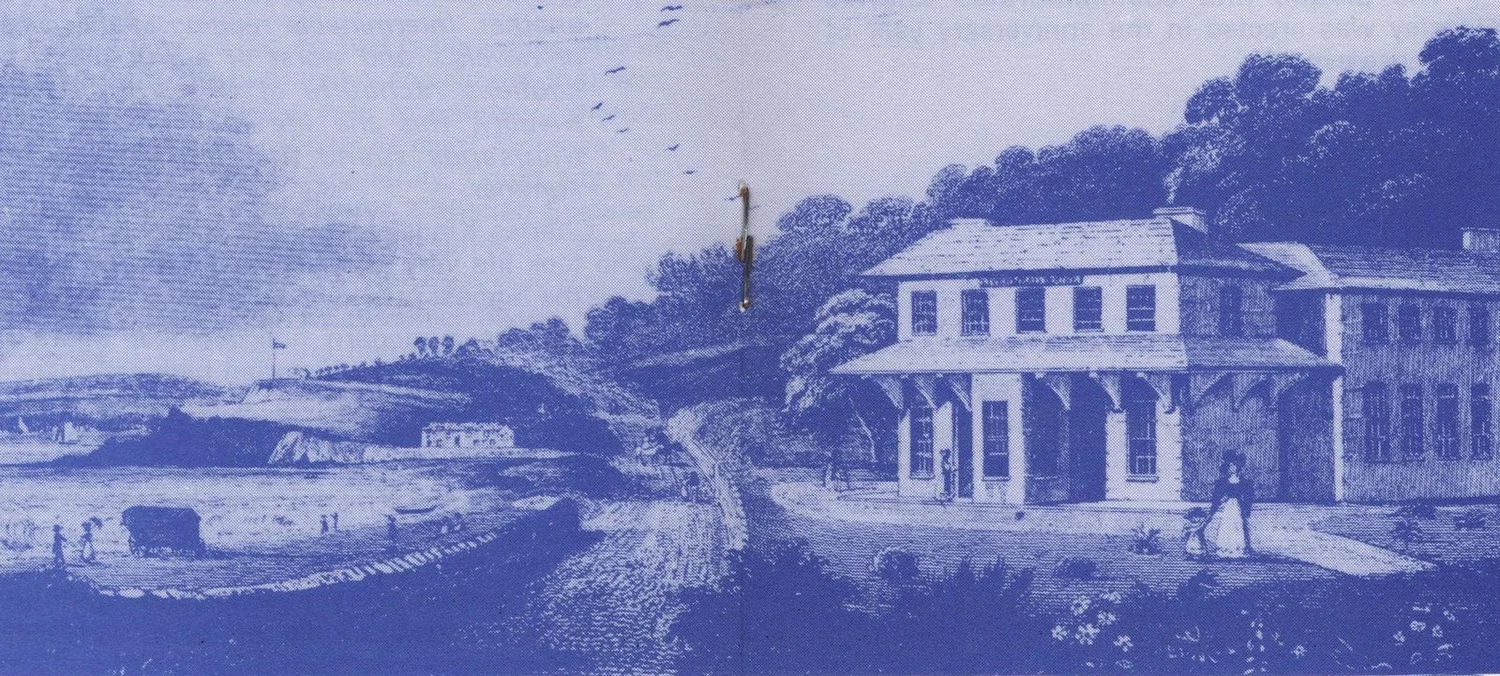
When the Rev. Roger Mallock, of Cockington Hall, decided in 1820 to build a house for his guests by the sea, he chose a site that was one of the most picturesque and attractive in the Bay. His building has been enlarged and modernised over the year, but it is still with us, as Livermead House Hotel. In this building, over a hundred years ago, a famous Victorian figure brought his wife for a six months visit.
He was the author of The Water Babies, a children's book which no one who reads it can ever forget. It changed the way our Victorian forbears thought and behaved.
Charles Kingsley was a towering figure among the Victorians, and he influenced the age in very many ways. He was a popular and important novelist. He became a University Professor and a leading luminary in the Church of England. He was a man of real scientific interests. But that was not all. He fought long and hard on behalf of the underprivileged, especially the underprivileged of tender years.
The Water Babies may on the face of it have been no more than an imaginative and gripping story, but it put an end to an abuse of children that had persisted through a large part of the reign of Queen Victoria.
The abuse of forcing small children to climb up inside the large chimneys of the time and clean the soot away with nothing more than a hand brush.
When Charles Kingsley arrived in Torquay in 1854 he was a comparatively young man. His wife had contracted an illness that caused some concern, and his bishop had given him six months leave of absence from his vicarage at Eversley in Hampshire.
Why did he choose Torquay as a place for her convalescence? The main reason was undoubtedly for the sake of his wife's health. Medical opinion at the time attached great importance to the curative properties of fresh air, warmth and sunshine, which had come to be considered more important than spa waters and thermal baths.
A second reason was that his friend Philip Gosse, the marine biologist, had spoken with great excitement of the wealth of anemonies and starfish and rare marine life to be found on the many sandy shores and coves of the Bay. A third reason was that he thought he might earn a little money by preaching from the pulpits of a town noted for its large churches and rich congregations.
But here Kingsley was in for a great disappointment. He was to discover that in some quarters he was thought to be a dangerous and subversive figure.
Only six years before his arrival he had published Yeast, and followed it up two years later with Alton Locke. There was no way these titles could appear on the reading lists of the genteel young ladies of Torquay. Here was a writer who was as concerned as Charles Dickens with exposing the injustices in society and the sufferings of the poor.
What was worse, he had been a supporter of the Chartists, an outrageous movement that was in favour of giving the vote to ordinary ignorant working class men. Whatever next? Moreover he did it in the name of Christianity. Could any two words be more contradictory? ‘Christian Socialist’ cried his critics, holding up their hands in horror.
But this was the name, although they may not have known it, of a movement which he had helped to found. It was also the name of the journal to which he was for a year a regular contributor.
The Bishop put his foot down. Never was such a man to be allowed to preach from a Torbay pulpit, he thundered, from the Bishop's Palace across the Bay, in the building that is now the Palace Hotel. The Bishop's word was law.
Kingsley found very real and very important compensation by the sea shore. He spent his days wandering along the beaches when the tide was going out, searching for specimens of sea life, pouring over them at night with magnifying glass and scalpel, and producing exquisite water colours and drawings.
The beach by Corbyn Head was admirably suited to just such an exercise. Six months later Kingsley added another book to his list, Glaucus. This was a detailed account of his explorations and discoveries among the rock pools below the Livermead House Hotel.
Kingsley in his preface to Glaucus pleads with the average holidaymaker in Torquay to forsake his frivolous pursuits for the health-giving and instructive pursuit of marine biology. It tells us a lot about Kingsley and about the holidaymakers of those days:
You are going down, perhaps, by railway, to pass your normal six weeks at some watering place along the coast, and as you roll along think once more, and that not over cheerfully, of what you shall do when you get there. You are half-tired, half-ashamed, of making one more in the ignoble army of idlers, who saunter about the sands and cliffs and quays. A great deal of dressing, a lounge in the club room, a stare out of the windows with the telescope... a walk up one parade and down another, interminable reading of the silliest of novels... and worst of all, at night, the soulless réchauffé of third-rate London frivolity; this the life in death in which thousands spend the golden weeks of summer.
Charles Kingsley was not the only Victorian who took life very seriously and even on holiday gave the highest priority to self-improvement.
But lest a modern holidaymaker might fall under the spell of this Victorian high seriousness, here is a word of warning. It is little use today venturing out onto Corbyn Sands with net and collecting box. He will find very little. The trouble was that Charles Kingsley and his friend Philip Gosse, with their publications, caused such a passion for marine biology to sweep the land that within a few years the sea shore had been ransacked of most of its precious specimens. Sometimes the good intentions of even the worthiest of men have an effect they did not anticipate.
Just a year after his stay in Torquay he published Westward Ho! which vividly expressed the patriotism that ran through the country at the time of the Crimean War. It is about a Devonshire seaman, Amyas Leigh, fighting the Spaniards at the time of the Armada. It is fiercely anti-Catholic and blood-thirstily violent.
In later years Charles Kingsley became highly respected and won increasing fame as a member of the literary and clerical and academic establishment. He was appointed Professor of Modern History at Cambridge and was made a canon at Westminster.
But even to the end he remained a figure of controversy. He was one of the few members of the Church of England in the 19th century who was able to accept the evolutionary theories of Charles Darwin, something that was beyond the reach of such leaders of thought as Goethe and George Eliot, and with which even to this day many people are unable to come to terms.
The second half of the 19th century was marked by many violent confrontations. Whistler sued Ruskin for saying he threw a pot of paint in the face of the public, Oscar Wilde sued Lord Alfred Douglas. Neither of these causes célèbres caused more excitement than when Charles Kingsley took on the Roman Catholic Church in the shape of Cardinal Newman. He publicly accused the Cardinal of agreeing with the statement that ‘Truth for its own sake has never been a virtue of the Roman clergy’. Newman's reply was in the shape of Apologia pro Vita Sua, a book which has remained a classic to this day. It was generally felt that Kingsley got the worst of it.
After he died, at the early age of 55, his wife edited his Life and Letters, in which appears a touching tribute to the town where he had a brief respite to a busy, public, controversial life:
Torbay is a place which endears itself to the patriot, the naturalist and the artist. We cannot gaze on its blue ring of water and limestone bluffs which bound it to the north and south without a glow passing through our hearts as we remember the terrible and glorious pageant which passed by it in the bright days of July 1588, when the Spanish Armada ventured slowly past Berry Head with Elizabeth's gallant pack of Devon's captains following fast in its wake... the white line of houses too on the other side of the Bay is Brixham, famed as the landing place of William of Orange: and the stone on the pierhead which marks his first footsteps on British ground is sacred in the eyes of all true English Whigs.
The plaque that commemorates Charles Kingsley was erected in the anniversary year of both these events.
Research: John Pike, 1988
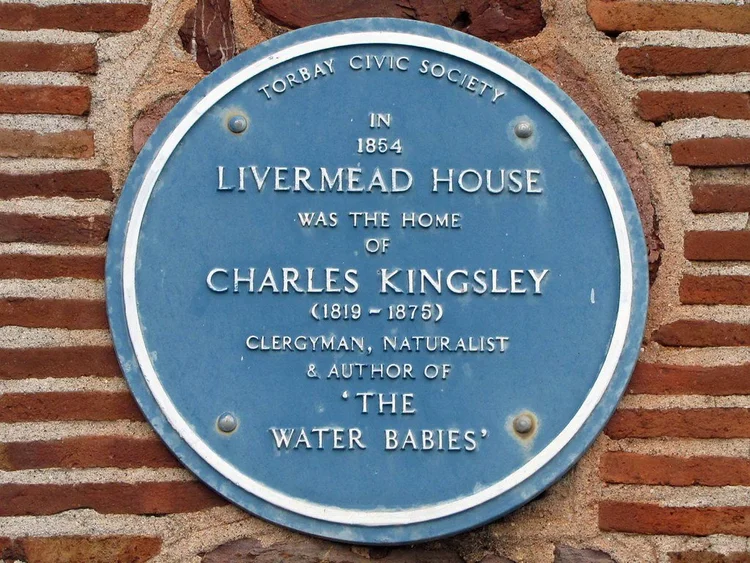
The Plaque
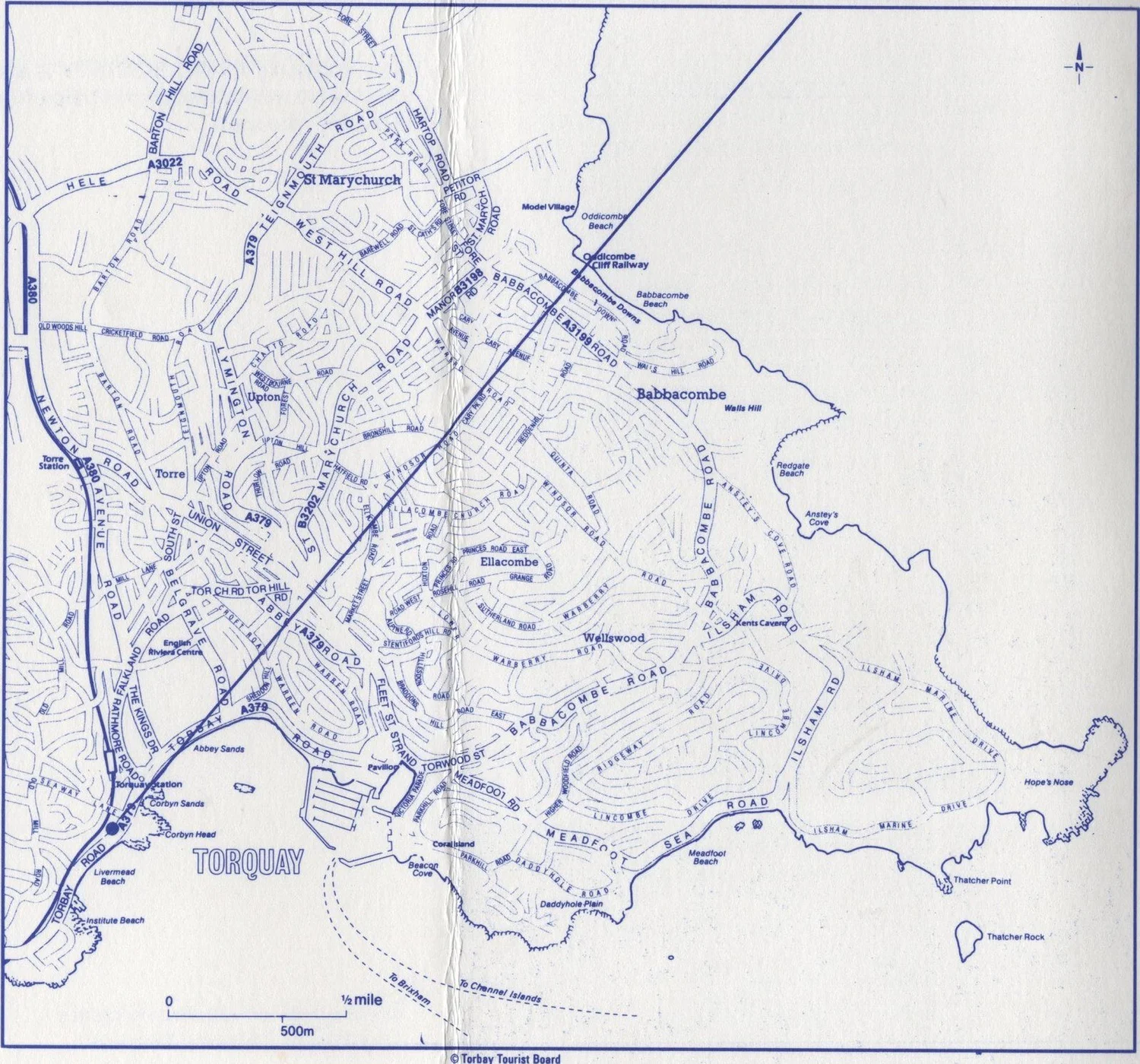
The plaque to which this leaflet refers is affixed close to the main entrance of the Livermead House Hotel.
How To Get There
Livermead House Hotel is a well-known and prominent building situated on the sea-front one mile from Torquay Harbour. A number of Bayline and Devon General bus services pass along the sea-front.
What To Read
- Pope-Hennessey, Una. Charles Kingsley.
- Kingsley. Charles Kingsley, Life and Letters, edited and written by his widow. 1877.
- Kingsley, Charles. The Water Babies.
- Kingsley, Charles. Glaucus. 1890.
Where To Go For Further Information
- Torquay Central Library
- Torquay Museum, the Museum of the Torquay Natural History Society
Acknowledgements
The Torbay Civic Society gratefully acknowledges the sponsorship of this leaflet and the plaque to which it refers, of Mr. John Perry and the Livermead House Hotel, Torquay. The Society is also pleased to acknowledge the help of the Torquay Museum.
Photograph of Charles Kingsley courtesy of Torquay Museum.
The Plaque Inscription
Torbay Civic Society. In 1854 Livermead House was the home of Charles Kingsley, 1819–1875, clergyman, naturalist and author of ‘The Water Babies’.