
Torbay Civic Society
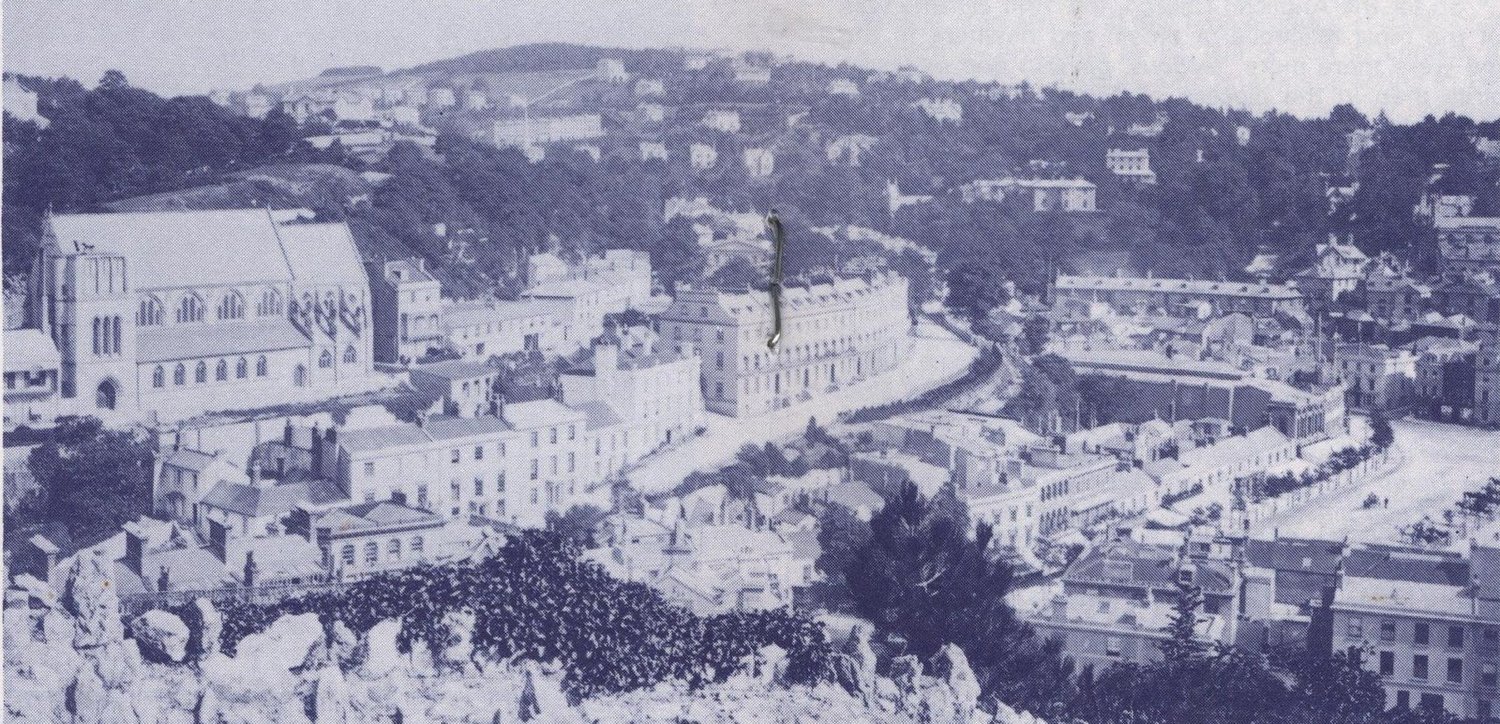
The Church of St. John the EvangelistDesigned by George Edmund Street, built 1861-71
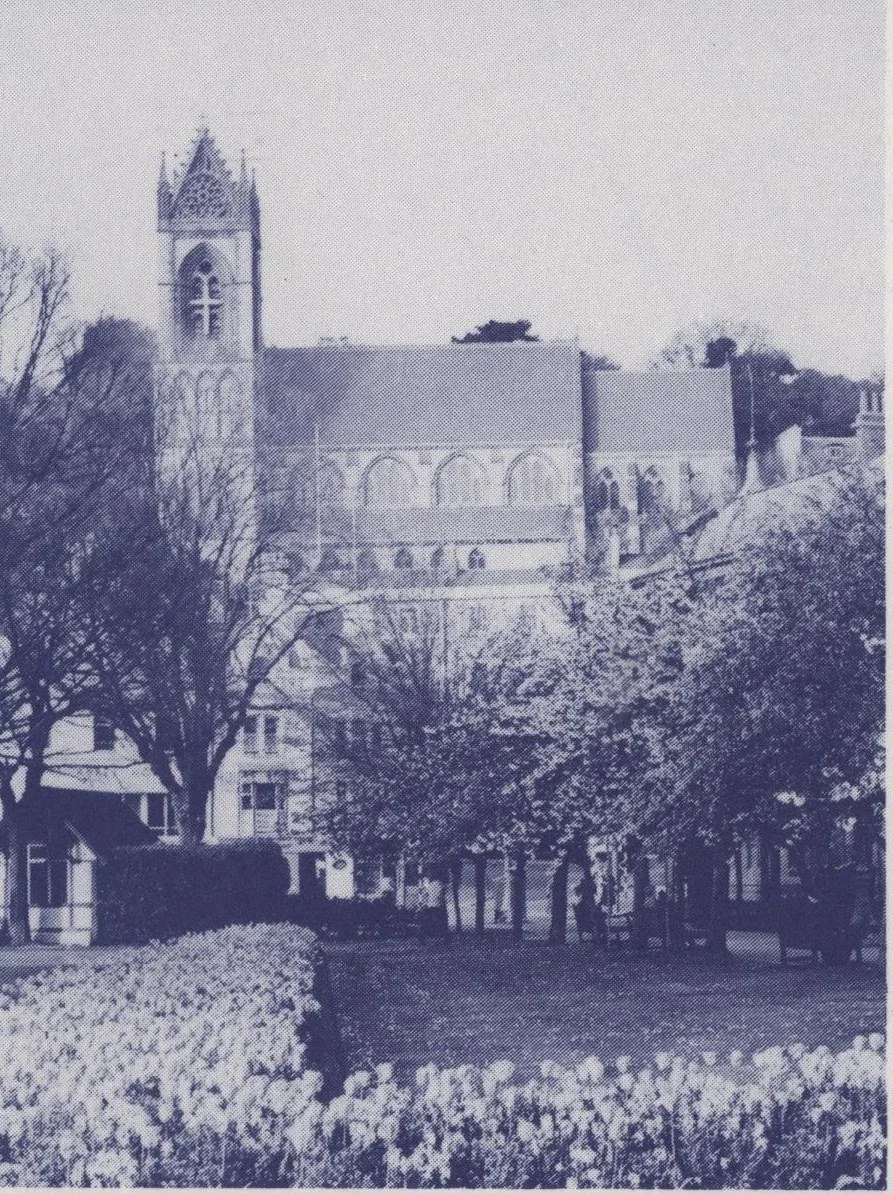
The foundation stone of the Torquay Chapel, forerunner of St. John's, was laid on 1st May 1822. The tower was finally completed on 30th April 1885, a time-span of 63 years, which witnessed the change of Torquay from a modest watering-place nestling around a little harbour, to a spacious resort attracting the most fashionable society in England and throughout Europe. At the same time, those mid-Victorian years were characterised by some of the most fierce doctrinal debate and intense liturgical argument, the like of which had not been seen or heard for two centuries.
At the turn of the 19th century, Torquay hardly existed, indeed existed only as Tor Key, a fishing hamlet, an unimportant part of the Parish of Torre. But following Dr. Russell's treatise on the beneficial effects of sea water in the treatment of glandular consumption, the rush to the sea was on. The population would double, and quickly double again, and again. But in the hearts and minds of those rapidly-increasing numbers, loomed a great concern. Where were they to worship? For the importance of the Church and church attendance throughout most of the 19th century, can hardly be exaggerated. Certainly, there was the ancient ‘and somewhat shabby’ Parish Church of Torre. But from the harbour area to Torre was not then the brisk 15 minutes walk it is today. A laborious journey along the narrow and marshy Swan Street, alongside the Flete brook, as far as what was to become the town's first Town Hall, but was then an orchard, followed by an even more difficult climb by rope-assisted path, was a journey difficult for some, impossible for most. A place of worship, close to the people, was imperative.
Efforts had been made. The Dean of Bristol, the highly-regarded and influential Dr. Henry Beeke had tried to secure land from the Lord of the Manor, Sir Lawrence Palk, but without success. Happily, however, help was at hand, from none other than the Squire of the neighbouring parish of Cockington, Rev. Roger Mallock, a member of an ancient and honourable family, who was able to purchase land from George Cary for £193. Thus on 6th March 1819, the first steps were taken which were to lead with certainty and with glory, to the establishment of a local place of worship. The name of Roger Mallock who became Founder and Patron of what was to be called the Torquay Chapel, will always be remembered by those who love St. John's, with regard and with affection.
This would, of course, be a chapel of ease or ‘Proprietory’ Chapel. No font, no licence for marriages, two services on Sundays only; but for the rapidly-increasing numbers who for so long had been denied their worship, it was an historic moment. Just how important may be illustrated by the standing of the Trustees appointed, all men of stature, learning and honour, and by the succeeding incumbents, John Sheepshanks, James Yonge and others, equally men of merit and of high distinction and attainment.
At a cost of £1,800 the Chapel was built in the semi-classical style of the times, rectangular, galleried on three sides, austere tho' not without distinction, particularly the two large, round, fluted pillars in front of and at each side of the altar. Around the south pillar was set the pulpit, on high to respect the galleries, and below the other pillar, the reading desk. The Chapel could accommodate about 600, pew seats on the ground floor, only a few of which were free, pew-rents being a very necessary source of income. Not much remains of the old Chapel, although mention must be made of the substantial Bishop's seat.
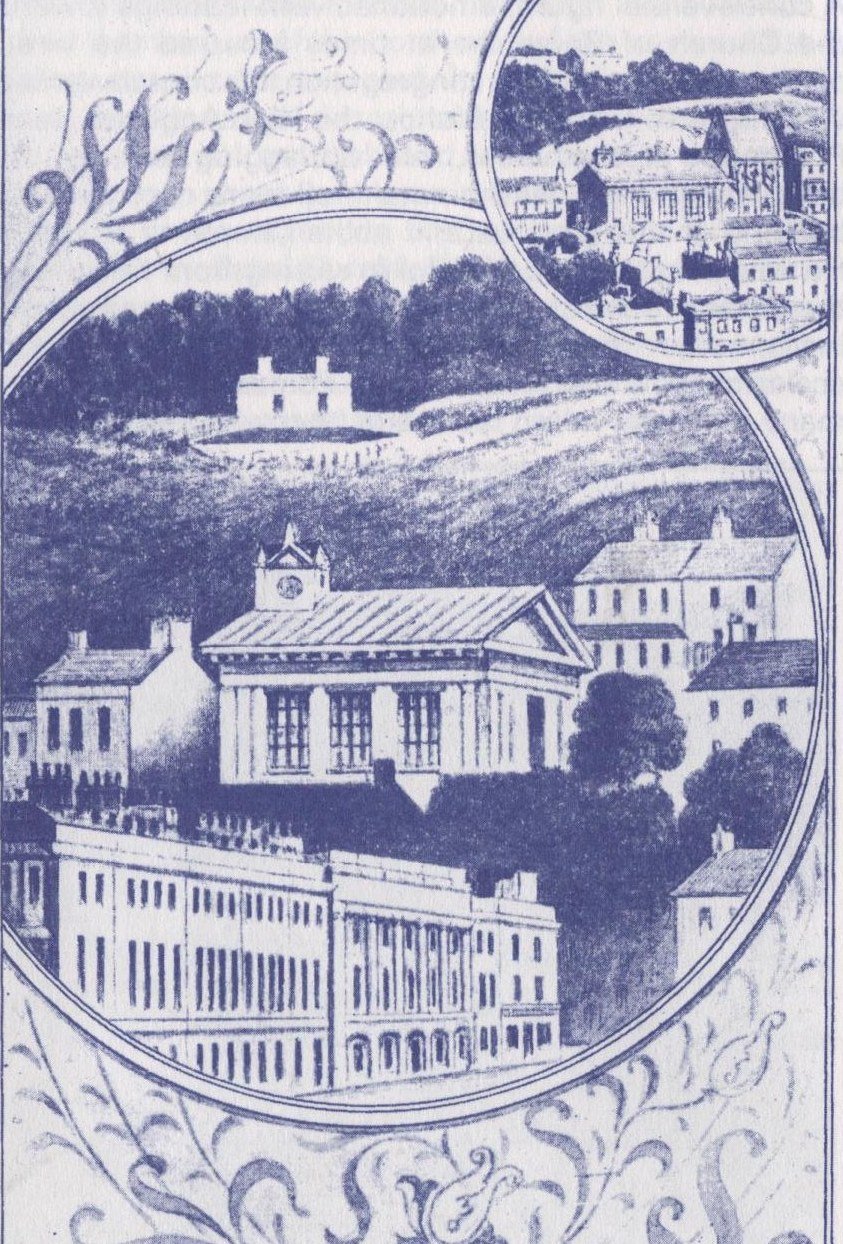
The Chapel served the people well for 40 years. But great changes had taken place in that time. By 1861, the population had increased more than eight-fold to 16,000, the style of the Chapel was considered now to be inappropriate, with its galleries and closed pews, and importantly, Peel's New Parish Act now allowed this inflated Parish of Torre to be sub-divided into more manageable districts. Thus in quick succession, following St. Mary Magdalene in Upton Vale, there followed the building of the churches of Saints Matthias, Mark, Luke and John.
The Rev. William George Parks Smith had held the curacy of the Chapel from 1837, when he was then 33. A controversial figure, emotional, with leanings towards the Church of Rome, he at times incurred the wrath of many members of his congregation, his churchwarden, William Kitson, and his Bishop, the High Anglican Henry Phillpotts. Nevertheless, his unflagging energy, his devotion, and his determination, all were central to the building of this glorious and noble Church of St. John. He was singularly successful in raising from his people, the funds needed at each stage of re-building, and equally instrumental in securing the services of the eminent ecclesiological architect George Edmund Street whose many churches adorn the realm, and who also designed the great Gothic extravaganza in The Strand, London, the Law Courts, and that magnificent temple to bureaucracy, the Manchester Town Hall.
The Church was to be built on the site of the Chapel, and to complicate matters further, services were to continue almost uninterrupted! But by determination and by grace, everything is possible. To provide the extra space necessary to accommodate the chancel, rock was quarried away; the eastern end of the Chapel removed and screens erected. In the remarkably short time of 18 months, the lovely chancel we see today was built, licensed, opened up for all to see, with all the panoply and ceremony it so richly deserved.
The next step was to build the north aisle, which required the removal of the north wall of the nave, whilst providing support for the roof. It would be tedious to offer a step-by-step description of how the work progressed, but to demolish and to re-build at one and the same time, poses problems which were overcome only by the sheer ingenuity of George Street and his builders. But by Palm Sunday 1871, the dream of Mr. Parks Smith, and of many others, had become reality, his sermon in stone ready for worship, although sadly and strangely, the incumbent had quite suddenly left his parish for Brighton, never to return.
A further 14 years were to elapse before St. John's took the form we see today. The tower still needed to be built. George Street had died, but it was his design that was executed by his son. Most commentators of the time offered their warmest congratulations to Mr. Street. Professor Pevsner considered the tower ‘fatally ugly’, but this time he must surely be out of step.
It has to be said, that St. John's was not born the happiest of children. In the early 1800's the Christian faith in England was in disarray. For more than two centuries following the Dissolution, the Catholic faith had been subjugated, even as late as 1778 when a Bill for the Relief of Catholic Dissenters was promulgated, Catholic chapels were burnt in protest. At the same time, there were those, whilst in the Anglican Church had never been able totally to accept all the Anglican doctrines. In 1829, the Catholic Emancipation Act was passed into law enabling Roman Catholics to speak out with total freedom. At the same time, the fires of evangelicanism which Wesley had stoked with such zeal in the previous century, were burning brightly. And thus the stage was set for dissention and disputation between those who each interpreted the Christian faith according to his own lights. Little wonder that Thomas Arnold said, “When I think of the Church, I could sit down and pine and die”.
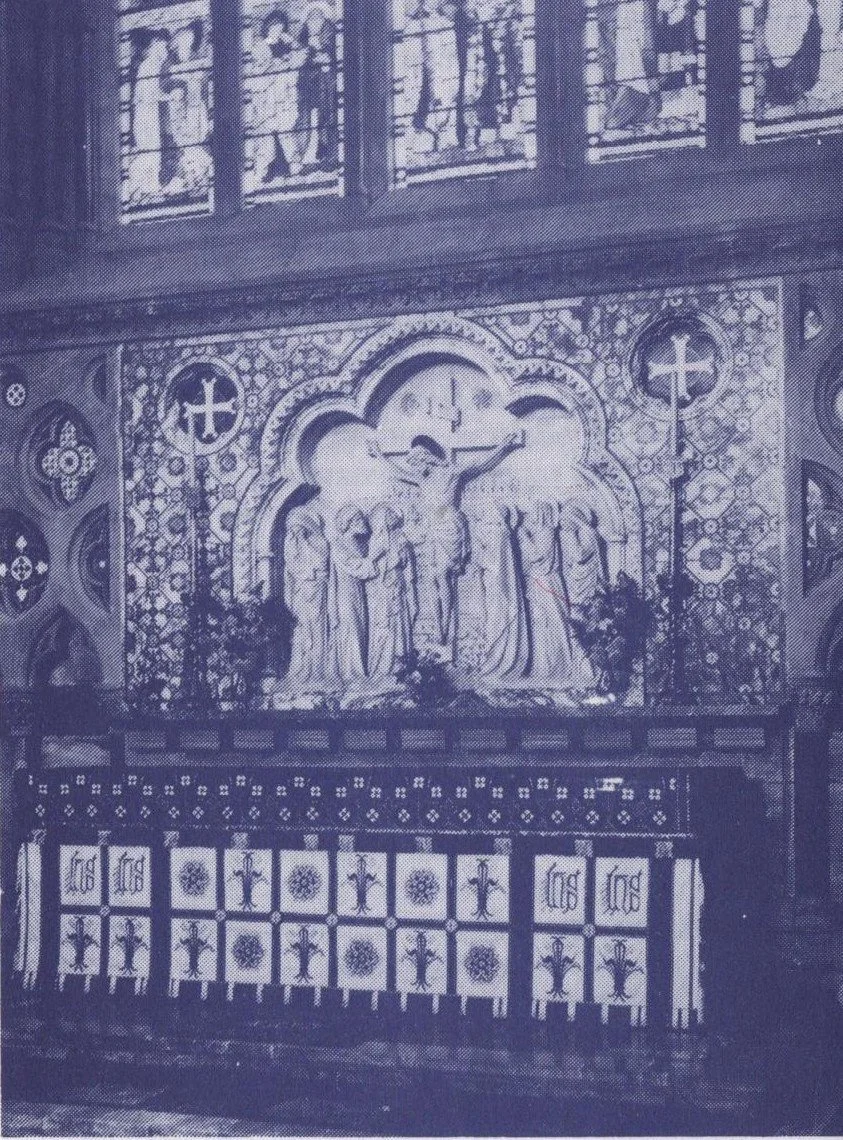
So for the Anglican Church, the 19th century was not the most felicitous of times, and nowhere in the land were there more ‘factious, peevish and perverse’ spirits than in the diocese of Exeter. The continuing dispute between those who favoured a spiritual as opposed to a ceremonial form of service had centred around the wearing of the surplice in the pulpit, the ‘White Badge of Tractarians’, as it was labelled by some. Bishop Phillpotts had ordered the wearing of surplices in 1844, but following a chorus of outright condemnation led by the Cathedral Chapter, had hastily retreated. St. John's Church, alone, continued to transgress, and not only had Parks Smith, the incumbent, upset many of his people in this regard. He had adorned the altar with flowers and a floral cross, put his choristers into surplices, and introduced the processional cross. As The Times put it, ‘He has exposed himself to great obloquy and persecution’. As indeed he did. In 1989 it seems extraordinary that flowers, vestments and crosses could cause so much upheaval. But in the mid-19th century Church of England altar ornaments were totally unknown, and anything at all which smacked of Romish tendencies was instantly condemned.
There can be little doubt that when St. John's needed to be guided through rough waters, it had neither the most appropriate captain, nor the most engaging of pilots. However, by 1870, Bishop Phillpotts had died, and the incumbent succeeded by the devoted and greatly-admired Canon Robinson, who brought a much-needed calm and tranquility to St. John's.
‘Three-fourths of the poetry of building lies in its minor details’ declared G.E. Street and nowhere is this more true than in the detailed work of the construction of St. John's. Space does not permit a description of all the adornments, the Salviati mosaics, depicting events in the life of St. John, the windows, the minstrels' gallery, but mention must be made briefly of three features specific to St. John's.
First, the Immersion Font. Christians have always placed particular importance on baptism originally as ‘a means of renouncing paganism’, and fonts have thereby always been regarded with particular reverence. Many of these fonts in Norman times were for total immersion, but few remain, Boggis says 15 in England. Those that do are mainly in lead. It is therefore more than unusual to have included in the original furnishings of St. John's, not only a total immersion font, but one made of marble, a ponderous piece of Petitor marble, needing 12 horses to draw it to its site.
Secondly, mention must be made of the organ, recognised as one of the finest in the diocese. The original Dicker organ, installed in the Chapel in 1823, literally expired in 1871, was replaced by an instrument designed by W.S. Rockstro, at one time organist at Babbacombe Church, and built by W. Hill & Son of London at a cost of £1,414. Re-built with pneumatic action in 1900, it was completely re-built in 1957 by J.W. Walker & Sons. For six years in the early 1800's, the organist was Henry Ditton-Newman, whose memory it was said, was kept alive for 70 years by ‘continuing to haunt the vicarage and Church with ghost music’. Presumably, J.W. Walker & Sons, were not only very good organ-builders, they could also exorcise ghosts! Substantially the organ in use today is the one installed in 1873, and Cyril Rider, the present organist, testifies that it is still ‘in very good shape’.
The third, and quite exceptional feature of St. John's, is the illuminated cross, erected high on the tower and visible for miles out to sea.
The name of Cyril Maude, highly-regarded actor-manager before the First World War, has perhaps been elbowed out in today's television age, but Maude who lived in the Parish, and with his wife, was a regular worshipper at St. John's, was twice president of RADA, managed the Haymarket Theatre, London and was fully involved in both films and theatre. Following his death in 1951, his widow had this delightful idea of having an illuminated memorial cross erected to his name. Sir John Fieldhouse, Chief of Defence Staff, has said:
‘St. John's Church has a special place in the hearts of seafarers. The illuminated cross shining from the Church tower has been a source of inspiration to many, and a sign that they are not alone.’
It was surely appropriate that at the Dedication Service, held 8th September 1955, the first psalm to be sung, was Ps. 121 where the first verse starts with the words, ‘I will lift up mine eyes to the hills’, for this inspiring memorial is the final touch to a Parish Church which towers majestically over the town centre and the harbour, and which provides a perpetual reminder of things spiritual and eternal.
Written by Denis Walton, 1989
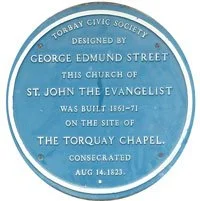
The Plaque
The plaque to which this leaflet refers is affixed close to the West Door of the Church.
How To Get There
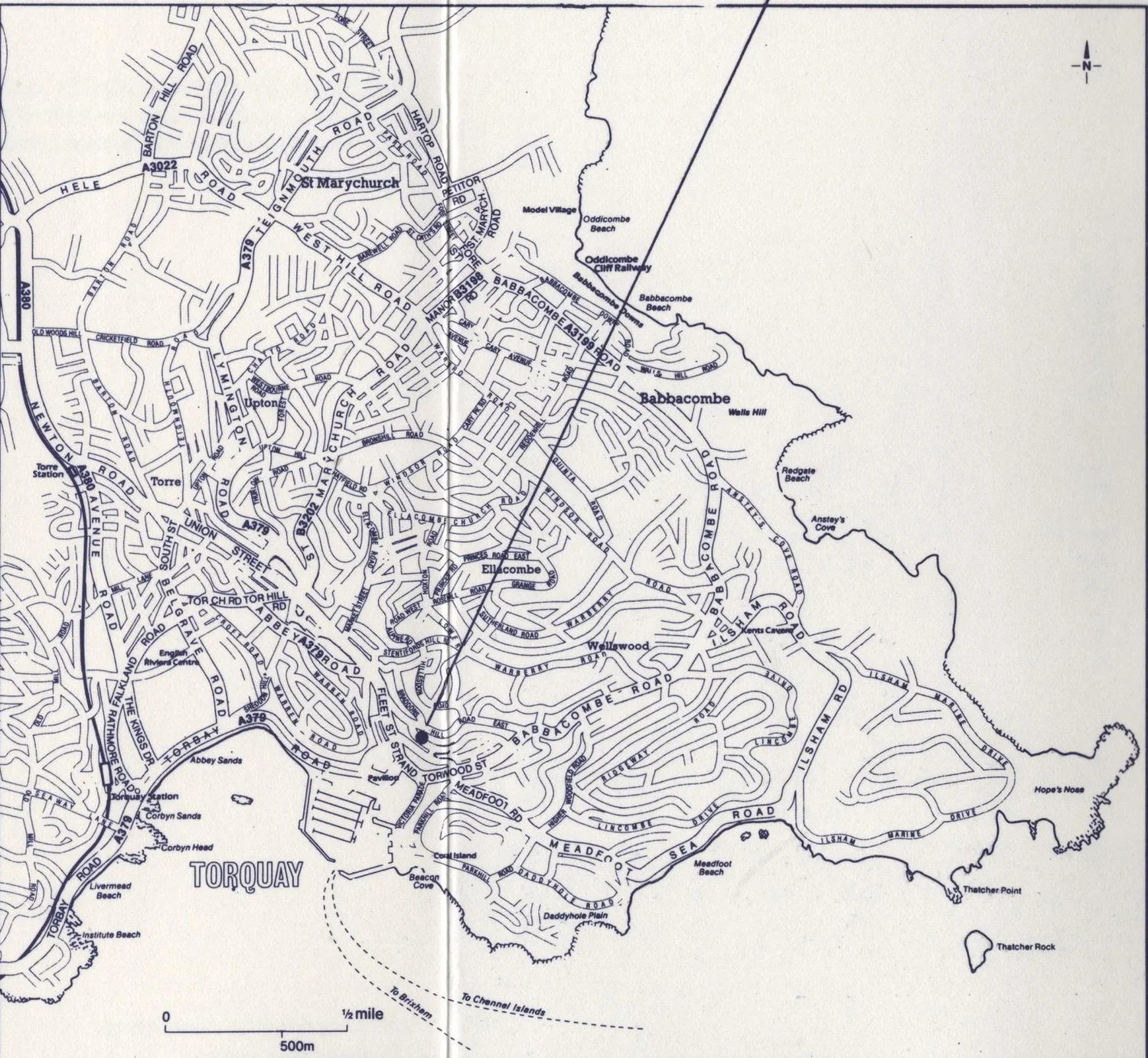
St. John's Church Tower, readily identifiable by its large white cross, illuminated during the hours of darkness, can most easily be approached by cars and pedestrians making for The Terrace Car Park, well-signposted from central areas of the town. There is no public transport.
What To Read
- Boggis. History of St. John's, Torquay. Devonshire Press.
- Devon County Education Committee. Church History in Devon.
Further Reading
- Moorman, J.R.H. A History of the Church in England. Black.
- Rodwell and Bentley. Our Christian Heritage. Guild Publishing.
Where To Go For Further Information
- Torquay Central Library.
- Torquay Museum, the Museum of the Torquay Natural History Society.
Acknowledgements
The Torbay Civic Society gratefully acknowledges the sponsorship of this leaflet and the plaque to which it refers, of the Partners of Messrs. Hooper & Wollen, who have for generations given their valuable services to the Church as Honorary Solicitors.
The Society is also pleased to acknowledge the help of the Torquay Museum and Central Library, Torquay.
The Plaque Inscription
Torbay Civic Society. Designed by George Edmund Street, this Church of St. John the Evangelist was built 1861-71 on the site of the Torquay Chapel, consecrated Aug 14. 1823.