
Torbay Civic Society
Torre Abbeyand the Cary Family
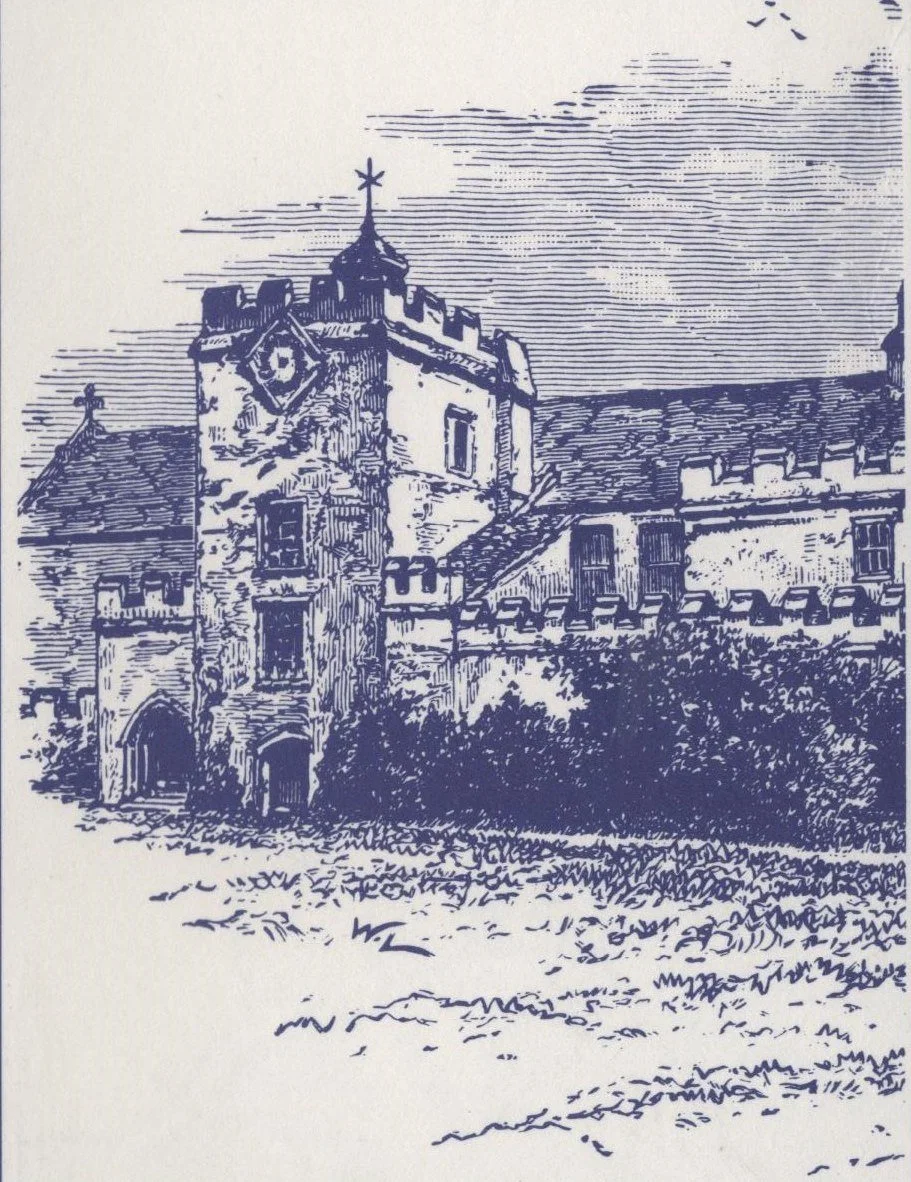
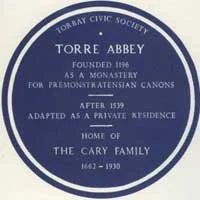
Torre Abbey, Torquay's oldest and most historic building, has graced the shores of Tor Bay for almost 800 years, since it was founded as a monastery for the Premonstratensian Order of Canons in March 1196, although the site of the Abbey had been settled for centuries before this time. The earliest known written reference to the site is in the Domesday Book, which records that in 1066, at the close of the reign of King Edward the Confessor, the land at Torre was held by a Saxon nobleman by the name of Alric, who is also recorded as holding the neighbouring manor of Cockington. No doubt Alric was the latest in a long line of Saxon owners of Torre, but the names of these no doubt worthy gentlemen are lost to us.
Following the successful invasion of Britain by William of Normandy in 1066, Alric was, like most of his contemporaries, ousted from his manors, which were then divided up amongst William's followers. By the late 12th century, Torre was in the hands of Lord William de Brewer, a powerful and influential nobleman, who was a friend of and adviser to King Richard the Lionheart. Following Richard's imprisonment in Austria by Duke Leopold, after the Third Crusade, it was de Brewer who was appointed to raise the 150,000 marks demanded as a ransom. (This was a vast sum of money, in today's terms many hundreds of millions of pounds.) It proved possible to raise only half this enormous sum, and so, in 1194, 67 hostages were sent to Austria as security for the remainder, one of the hostages being de Brewer's son, William the Younger. In 1195, the hostages were released unharmed, and as a thanks offering for his son's safe return, Lord William presented the Premonstratensians with land and money for the endowment of a new monastery, the canons arriving the following year.
As the centuries rolled by, Torre Abbey grew rich and prospered, until it became the wealthiest Premonstratensian monastery in the country. In 1363 the Lordship of the Manor of Torre itself came into the Abbey's possession, and this, together with the many other estates it owned in the area, made the Abbot of Torre a feudal lord of considerable importance in South Devon.
The Abbey buildings followed much the same standard pattern as most other monastic sites, there being a central square and open courtyard surrounded on all four sides by the monastic buildings. The great church itself stood on the north side; the chapter house and sacristy, with dormitories above, stood on the eastern side, the refectory on the south, and the kitchens, guest hall and the Abbot's apartments to the west.
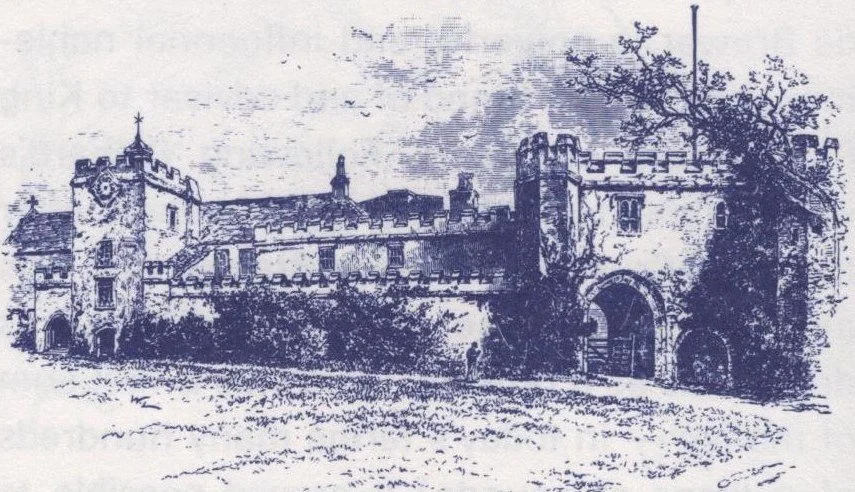
At the dissolution of the monasteries by King Henry VIII in 1539, all of the 2,000 or more monastic establishments in England and Wales were closed down and the monks expelled. Torre Abbey was surrendered to the King's commissioners in February 1539, the last Abbot, Simon Rede, becoming vicar of Townstall at Dartmouth. Evidence obtained by recent archaeological excavation points to most of the Abbey church itself being demolished shortly after this date, whilst the other monastic buildings were allowed to sink into decay and eventual ruin, much of the stone being removed by local villagers for the repair of their houses.
In December 1598, the site and its remaining buildings were purchased by the Ridgeway family, who converted the south and west ranges into living quarters, thus opening a new chapter in the Abbey's history, that of its use as a private family home. The Ridgeways however, preferred their other home, Torwood Manor, and in December 1662, Torre Abbey was purchased by the long-established Devon family of Cary, a branch of which had lived in nearby Cockington Court from 1374 to 1654.
The first of the long line of Carys of Torre Abbey was Sir George Cary, who had been knighted by King Charles I at Greenwich on 3rd July 1632. One of the first acts of Sir George and his wife, on taking up residence, was to construct a secret chapel within an old attic above the ceiling of the Dining Room. The family were very devout Catholics, and in those years of religious intolerance anyone discovered attending Mass could be arrested and charged with high treason. Sir George and Lady Cary's time at the Abbey can never have been easy. Only five years after taking up residence, a Dutch Fleet under Admiral De Ruyter, swept unopposed into Tor Bay, burned several fishing boats and then, by way of passing the time, loosed off several broadsides in the general direction of Torre Abbey. Lady Cary suffered the added indignity, after her husband had died in 1678, of seeing the Abbey searched for arms, by the soldiers of William of Orange, when the Prince landed at Brixham in 1688. As the house of a known Catholic, Torre Abbey was an obvious target of suspicion. Prince William's soldiers we are told, were received by Lady Elizabeth in ‘icy silence’.
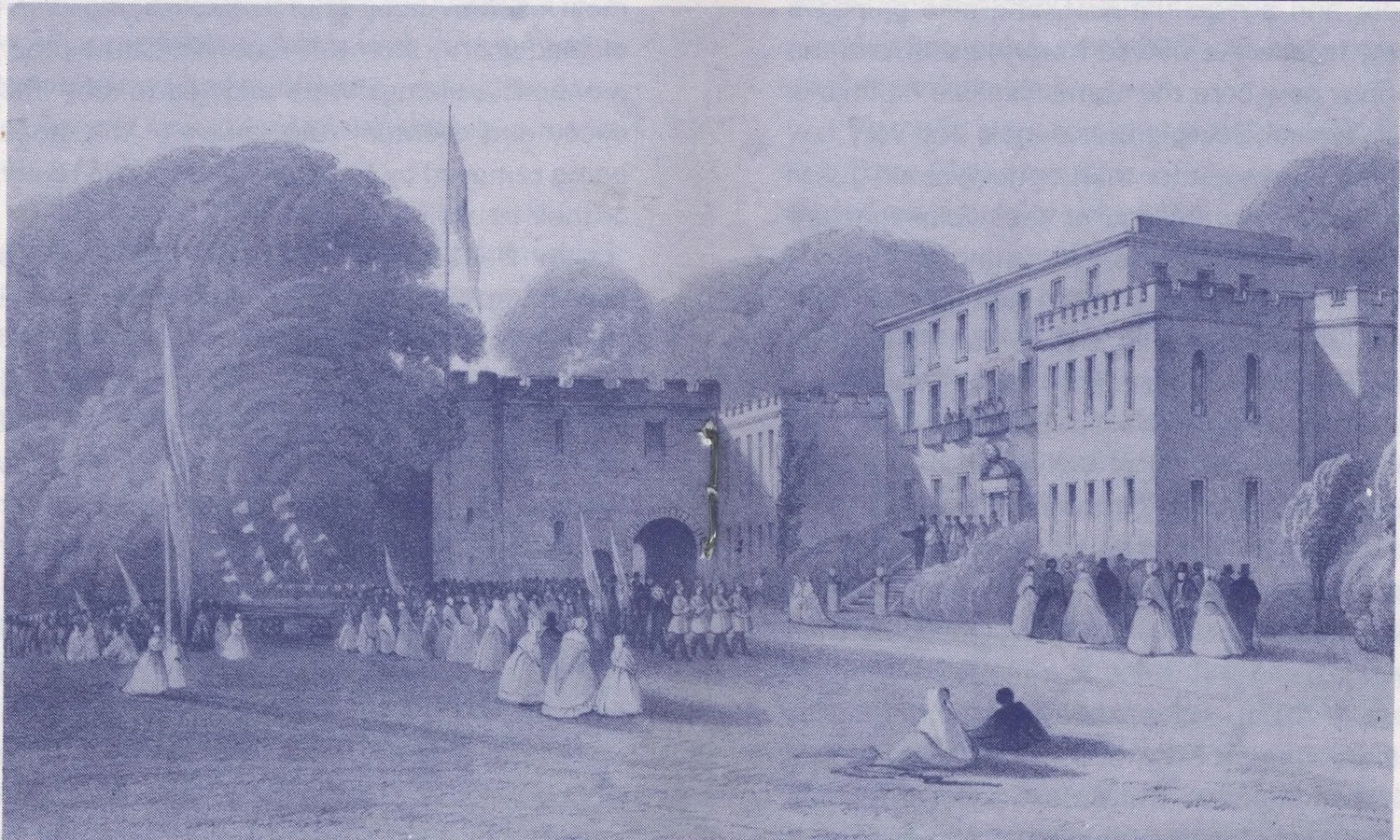
It is probable that Sir George and his heir, his eldest son Edward, lived in the house as they found it, making few alterations from the days of the Ridgeways. They both had large families and it is doubtful if their finances would have managed any large scale rebuilding. It was left to Edward's son George Cary II, and his wife, who were childless, to undertake a rebuilding programme. Between 1700 and 1750 vast and sweeping changes were made both to the exterior and the interior of the Abbey, converting it into a residence that befitted the Carys' standing as the leading family in the neighbourhood. The majority of the Ridgeways' interiors were swept away, the southern range of buildings facing the sea was raised in height by the addition of a new top floor and a new flat roof, and also gained a new façade. As viewed from the seafront, the Abbey now bore the unmistakeable hallmarks of a typical Georgian residence, and very few of its visitors, either then or now, could guess at the very great age of the walls that are hidden under the external coating of stucco.
Throughout the 18th century the Cary family lived the quiet and comfortable life of country land-owners. Their estate was large, and the Abbey itself was completely secluded and surrounded by a well-wooded park. The following century however, saw drastic changes, as the terraces and villas of the newly-fashionable seaside resort of Torquay began encroaching on the borders of their estate.
In 1828, Torre Abbey was inherited by Henry George Cary, and in 1840, by his son Robert Sheddon Sulyarde Cary. Throughout the period of their ownership, the Cary estates themselves were rapidly developed, especially after the arrival of the railway in 1848. The private park surrounding the Abbey slowly shrunk in size, three sides of it being built up with modern development, although happily a screen is still provided by the trees planted by the family around the edges of the park.
After the first World War, the Cary family began to find the upkeep of the house and the estate, more and more difficult, death duties had made drastic inroads into their finances. It soon became apparent that it would not be possible to maintain the house. Thus in 1930 the family felt compelled to sell the Abbey and the park, which they did, to the Torquay Borough for £40,000, even in those days, a remarkable bargain!
From the start, the local authority realised that Torre Abbey would make the ideal setting for the collection of art treasures it had been gradually acquiring. Thus part of the building was repaired and re-designed to serve as an Art Gallery. After the Second World War, during which the Abbey was used by the Royal Air Force, little more in the way of improvement was carried out until the late 1970's when the Torbay Borough Council embarked on an ambitious 25 year restoration programme, which will eventually lead to the entire building and its contents being restored to their former glory. A great deal has already been achieved with the refurbishment of the art galleries, and the restoration in period style, of many of the other rooms. Amongst a large number of fine paintings on display are works by Burne-Jones, Holman Hunt, William Blake and John Martin, as well as valuable antique furniture and collections of terra-cotta, oriental snuff bottles, glass and silver. There are currently some 25 rooms on display, including the Dame Agatha Christie Memorial Room, made possible by the efforts of the Torbay Civic Society. This room contains many mementoes of the Torquay-born authoress, kindly loaned by her daughter, Mrs. Rosalind Hicks. A wide variety of exhibitions are held throughout the summer months in the large exhibition gallery. A full scale archaeological excavation was carried out on the site of the monastic Abbey Church between 1986 and 1988, which has resulted in much more valuable information concerning the monastic period being obtained, and also enabled the floor plan of the church to be seen by visitors for the first time.
The south-east wing of the Abbey now houses a suite of rooms used by the Mayor of Torbay, where important visitors to the Borough are received. Thus is maintained a continuous link through the centuries, reaching back over a 1,000 years to the days of Alric the Saxon and before that. Throughout all this time the site and the succession of buildings on it, have been at the heart of local affairs. Today, Torre Abbey is still at the centre of things, a link with the past and a bond with the future.
Written by Leslie Retallick, 1988
The Plaque
The plaque to which this leaflet refers is affixed to the exterior of the left hand pillar at the foot of the steps of the main entrance to the Abbey.
How To Get There
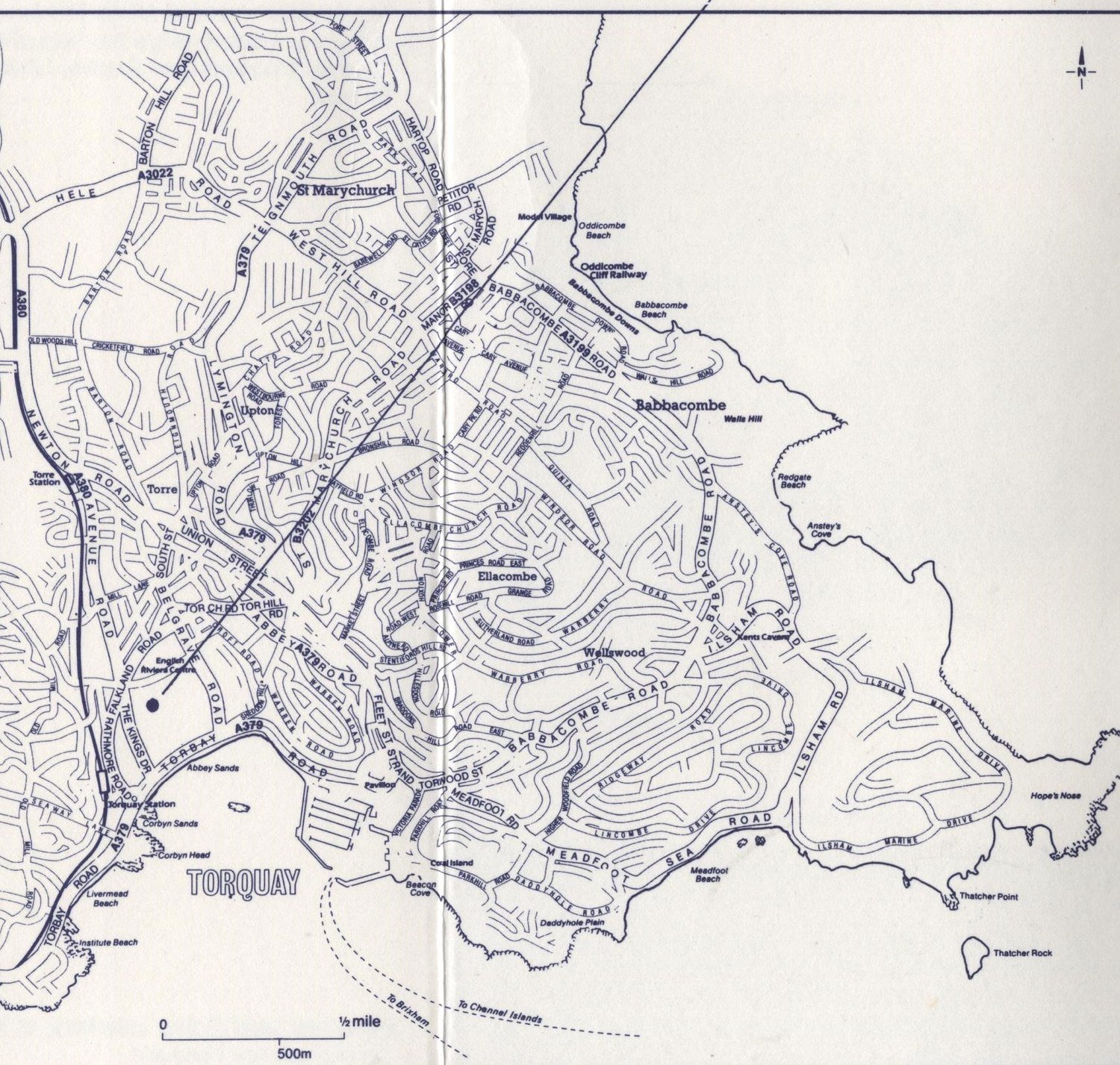
Torre Abbey lies in its own grounds on Torquay seafront opposite Torre Abbey Sands and adjacent to the English Riviera Centre. There is pedestrian access from the sea-front. Bayline Bus Service No. 32 passes the Abbey gates. Torre Abbey is open to the public every day including Sundays and Bank Holidays from 1st April to the end of October.
What To Read
- Colvin, H.M. The White Canons in England. 1951.
- Ellis, A.C. An Historical Survey of Torquay. 1930.
- Goudge, E. Gentian Hill (a novel).
- Retallick, L. Torre Abbey, An Illustrated Guide. 1986.
- Seymour, Deryck. Torre Abbey. 1977.
- Watkins, H. A Short Description of Torre Abbey. 1912.
Where To Go For Further Information
- Torre Abbey.
- Torquay Central Library.
- Torquay Museum, the Museum of the Torquay Natural History Society.
- Exeter Museum, Archaeological Field Unit.
The Plaque Inscription
Torbay Civic Society. Torre Abbey, founded 1196 as a monastery for Premonstratensian canons. After 1539 adapted as a private residence. Home of the Cary family 1662 to 1930.