
Torbay Civic Society
Richard Walter Wolston1799 to 1883, founder of the Torbay Paintworks and the Brixham to Churston Railway
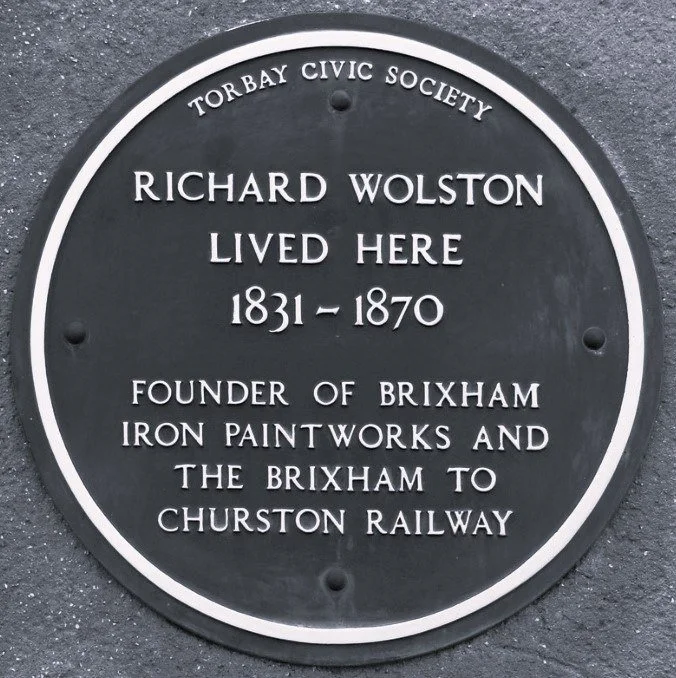
Richard Walter Wolston, solicitor, lived from 1831 to 1870 in a home on the site now occupied by the flats known as Saxon Heights, in Brixham. In Wolston's day, the house was a substantial gentleman's residence standing on one-and-a-half acres of landscaped gardens which included some ‘Gothic runes’ that he had commissioned in the fashionable style of the day. He had the house built in 1830/31 on the hillside overlooking the recently developed New Road to Churston and named his property ‘Parkham Wood House’.
Richard Wolston was born in London in 1799 though his family's origins were in Staverton and Torbryan. After qualifying as a lawyer, he came to Brixham in 1829. He was a man full of energy, enthusiasm and vision. As well as being a busy solicitor and notary public, he was clerk to the Harbour and Market Commissioners, Secretary of the Torbay and Brixham Harbour of Refuge and Dock Company, one of the Commissioners of the Dartmouth and Torquay Turnpike Trust, Portuguese Vice Consul, producer of limestone, owner of a flourishing iron ore mine, proprietor of the Torbay Iron Paint Works and Founder and Chairman of the Torbay and Brixham Railway Company.
His iron ore mine was situated by the windmill that used to stand at the highest point of what is now Higher Furzeham Road in Brixham. This began working in 1840 and produced a very sought after ore which he sold to the great Cyfartha ironworks in South Wales. The site also yielded clay which he manufactured into earthenware, and ochre, which was initially sold to the local fishermen to make a substance to preserve their sails. But, in 1847, he found another, more lucrative application for the ochre, that was as the basis of a rust-preventing paint.
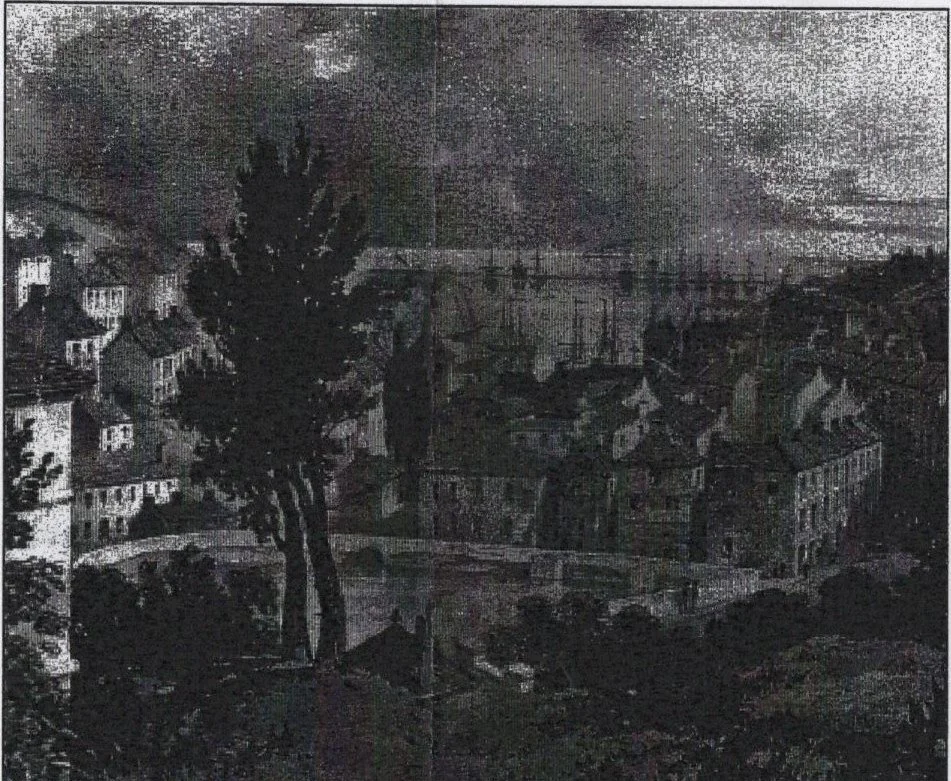
During the 18th century, iron-making had changed from producing wrought iron to cast iron and, during the French wars of 1793 to 1815, this new metal was turned into guns and armaments. When peace came, this material found hundreds of uses; building bridges and railways, engines of all kinds, aqueducts, factories, gas and water pipes and so forth. However, it had one fatal flaw, it rusted, unlike wrought iron. The great men of the day tried to find ways to prevent this, all in vain, and it was left to Richard Wolston's son in law to find the answer. His name was John Rendall and he was one of the earliest homeopathic chemists in England with a shop in Torquay and, later, in Exeter, Plymouth then two in London. He discovered that a paint could be made by grinding the ochre and mixing it with linseed oil. This oxide primer prevented rust forming on the cast iron.
Wolston set up a factory beside his iron mine to make the primer, which he called ‘Torbay Iron Paint’. It was in immediate and great demand and the original works soon proved much too small. In 1852 he built a new factory below the cliffs at Bench Quarry, now part of Oxen Cove, on the site of the present Dulverton Court, and paint-making continued there, long after his death, until the factory was sold in 1927.
Interested as Wolston was in all his miscellaneous affairs, his real concern was that Brixham should have a railway. This would serve to export his ore, limestone and paint and also to benefit the fishing industry so that its catch could speed to the markets of London, Bristol and other big cities. Ever since 1845, he tried to persuade people to put their money into such a scheme but even the citizens of Brixham, for whose benefit the railway was planned, refused to invest. By 1864, Brunel's Dartmouth and Torbay Railway had reached Churston, en route for Kingswear and, in despair of ever getting a branch to Brixham, Wolston decided to finance and build it himself. This line opened in 1868 and had cost him about £40,000, a vast fortune in those days, which bankrupted him.
He had organised the day-to-day running of the railway himself but was, unfortunately, no businessman and had no understanding of railway finance. He unwittingly defaulted on some legal requirements and was defrauded by other unscrupulous companies. In 1870 he filed a petition for liquidation by arrangement and was forced to hand over all his assets to the Bank who then endeavoured to transfer them profitably.
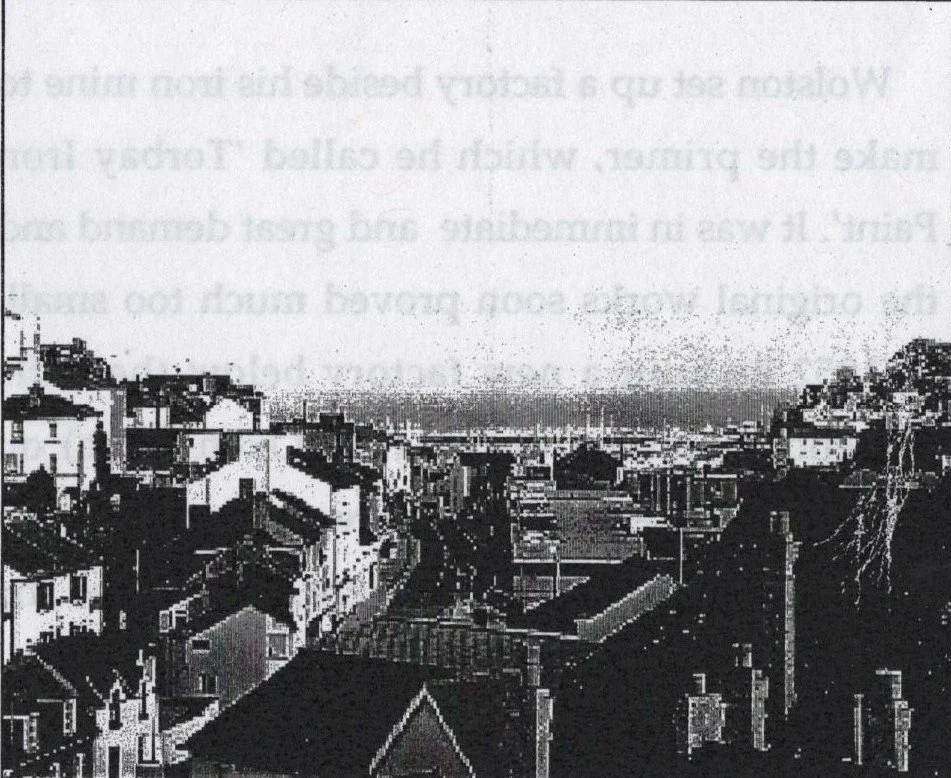
The Plaque
The plaque is mounted at Saxon Heights, New Road, Brixham, and was unveiled on 15 May 1998.
The Plaque Inscription
Torbay Civic Society. Richard Wolston lived here 1831 to 1870. Founder of Brixham Iron Paintworks and the Brixham to Churston Railway.
Acknowledgement
The presentation and celebration were sponsored by McCarthy & Stone (Developments) Ltd. This leaflet was produced by the Torbay Civic Society in association with Saxon Heights, Brixham.