
Torbay Civic Society
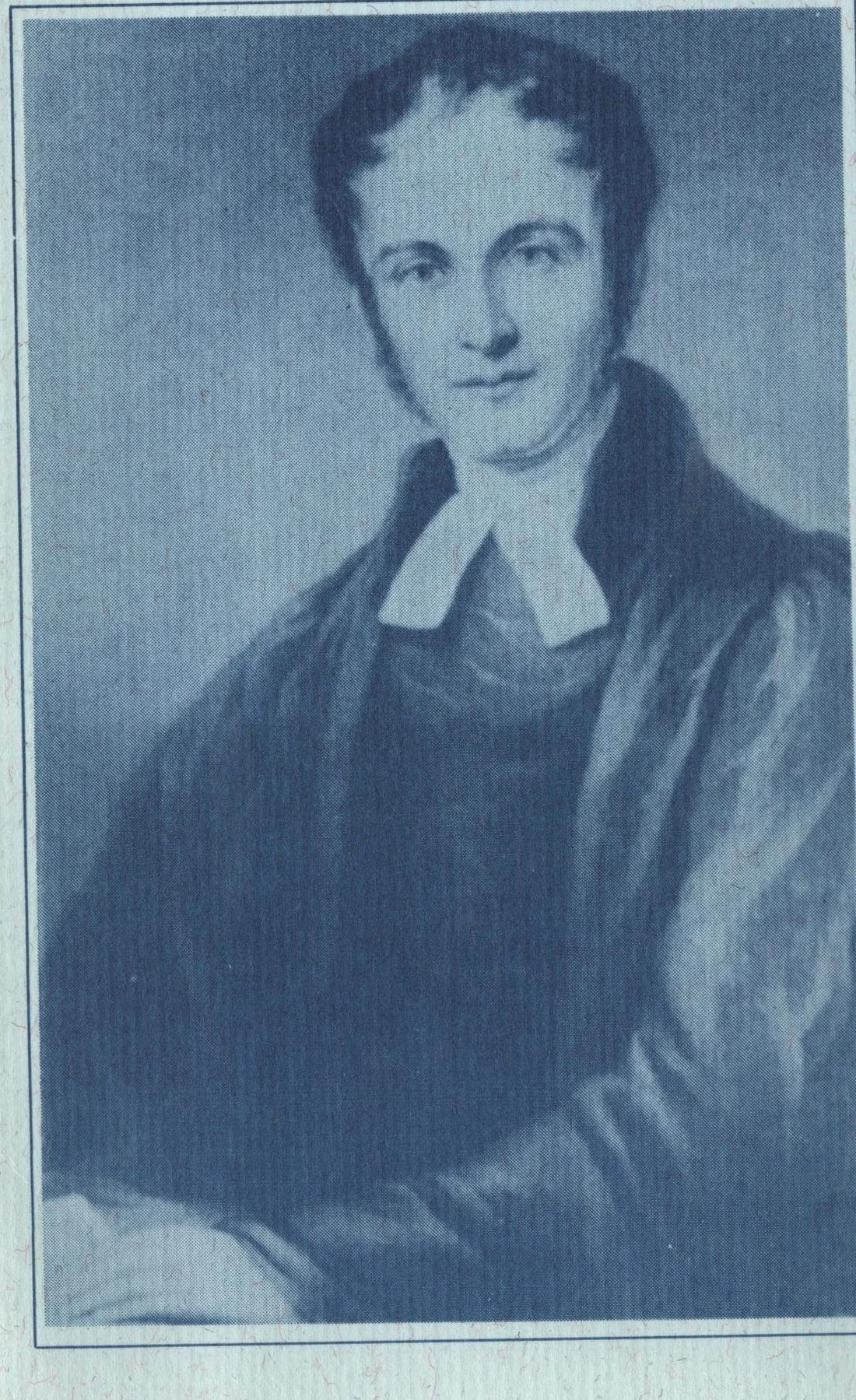
Rev. H.F. Lyteand Berry Head House
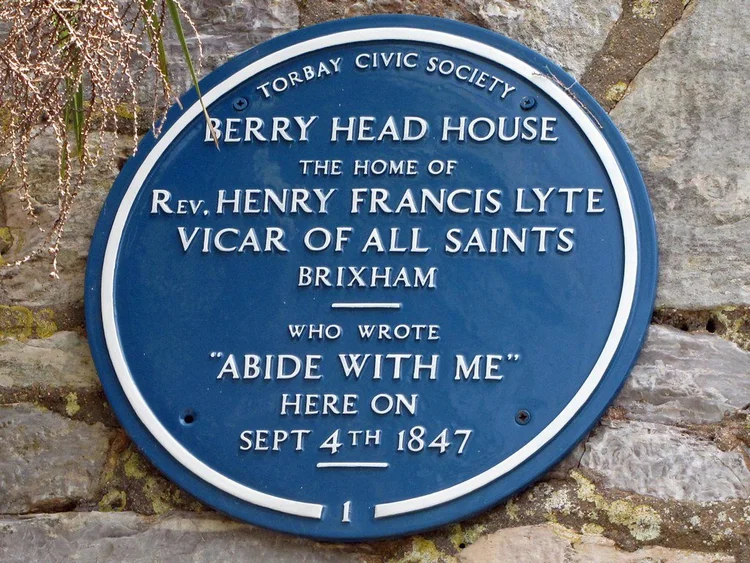
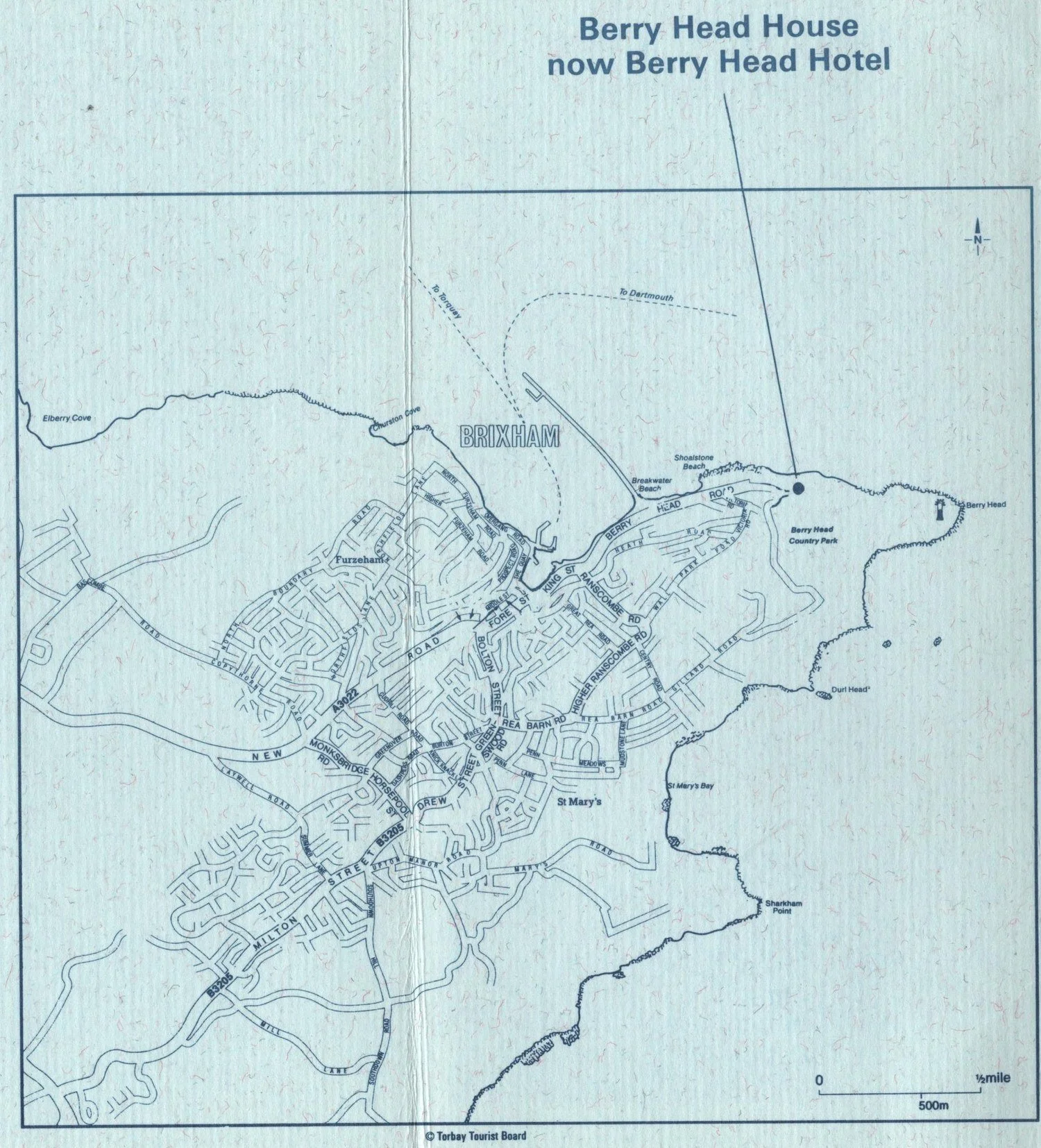
Berry Head House was built as a military hospital and then became a vicarage. It was for many years the home of the man who wrote what is perhaps the most famous hymn in the English language.
The hospital was built to care for the wounded during the Napoleonic wars. At first it was part of the fortifications erected on the headland to counter the threat of invasion. These consisted of two forts equipped with forty guns between them and with barracks to house the artillery men.
By 1809 the first hospital was found to be too small, and the present double storey building was put up in a more spacious and sheltered site below the headland. It was a large hospital for its time, with each of its two wings housing four wards.
Although the hospital appears to have been fully utilised the guns were never fired in anger. For a few days they did at least point in the direction of Napoleon himself: it was in 1815, the year of his defeat at Waterloo, when he was on board HMS Bellerophon, while the vessel was anchored under the lee of Berry Head, that the Emperor learnt he was to be transported to St. Helena for life.
In the years that followed the buildings fell into disuse, along with the Iron Age fort that had been built on the same site some three thousand years before.
In 1831 a Mrs. Bunns rented the hospital as a rest home. Mrs. Lyte who had been ill went there with her family. They were so happy they determined to obtain possession. After moving in early in 1833 Lyte eventually leased the hospital in 1834 along with some twenty-one acres of land, for the not insubstantial sum in those days of £1,125. It became the vicarage for All Saints, Brixham.
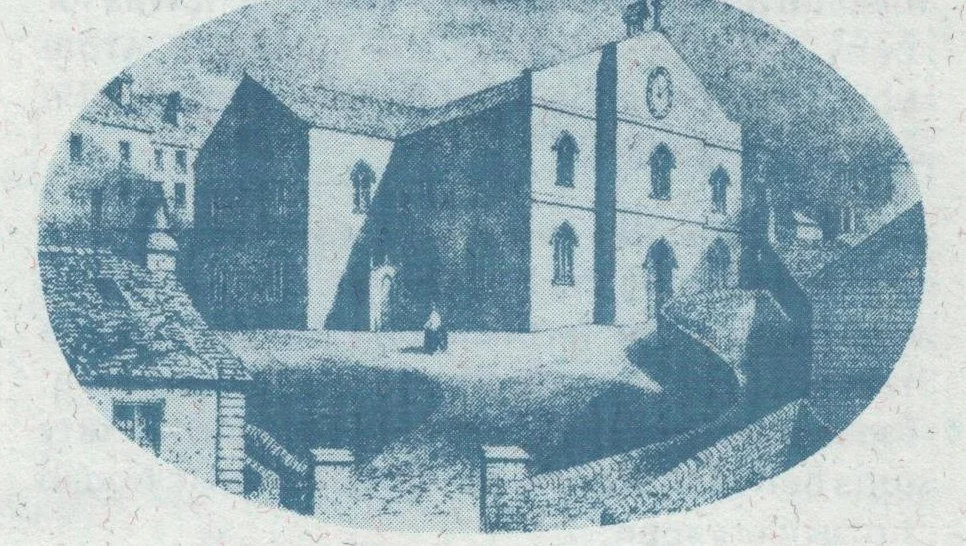
The Lyte family themselves lived in the west wing. The east wing was used to house the private pupils of the vicar who, like many Victorian clergymen, gave lessons to supplement his stipend, which amounted to £120 a year.
He had many distinguished pupils. One of them was Viscount Cranbourne, the eldest son of the Marquis of Salisbury, who was three times Prime Minister and who spent several holidays at the house. Lord Ogilvie was another of his pupils, and so was a son of Macready, one of the best known of Victorian actors.
But it is not for his pupils but for his hymns that Rev. Lyte is remembered today. He wrote many: “Praise my Soul, the King of Heaven” and “Pleasant are Thy Courts Above” are still sung in many churches every Sunday. His most famous hymn is of course “Abide with Me” which is sung in football stadiums as well as churches. It was said to have been written while he was looking for the last time over Brixham harbour. He was then a sick man about to set sail for Nice, where he died in 1847.
Rev. Lyte was succeeded in the parish, and in the vicarage by Rev. J.R. Hogg, who had married his daughter. It was on her initiative that “Abide with Me” was published in his memory, but surprisingly as it seems to us today, not until three years after his death.
From a photograph taken at the time we see the building as a gaunt and rectangular block of stone on a bare hillside. The trees and shrubs which now grace the gentle slopes of Torbay had yet to be planted by our Victorian forefathers. We have it on record however that the Hoggs employed a number of German emigrants who had been shipwrecked in Torbay to level the ground on the headland above the house.
After Rev. Hogg’s death his wife and daughters lived on in the house until the last daughter, Miss A.A.M. Hogg, died in 1933. The building was first put to its present use as an hotel in 1936.
Research: John Pike
About this series
This is one of a series commemorating notable people, buildings and events in the history of Torbay, prepared by the Torbay Civic Society with the approval of the Torbay Borough Council. The plaque appears on the building or boundary wall adjoining the road. The leaflet gives more information about the person, building or event. The notelet shows where to go and what to read for further information.
Subjects included in the series:
- 1Rev. H.F. Lyte and Berry Head House, Brixham
- 20The Old Clink, Paignton
- 21Herbert Whitley and Primley House, Paignton
- 24The Bijou Theatre, Paignton
- 40The Town Hall, St. Marychurch, Torquay
- 60The Vivian Institute, Torquay
- 91Baroness Burdett Coutts and Rosetor, Torquay
- 112Beverley Nichols and Cleave Court, Torquay
This leaflet, together with the plaque and notelet, have been made possible by the generosity of Sir Fred Pontin, the present owner of Berry Head House (now known as the Berry Head Hotel).