
Torbay Civic Society
John Salter1825 to 1891, Torquay artist
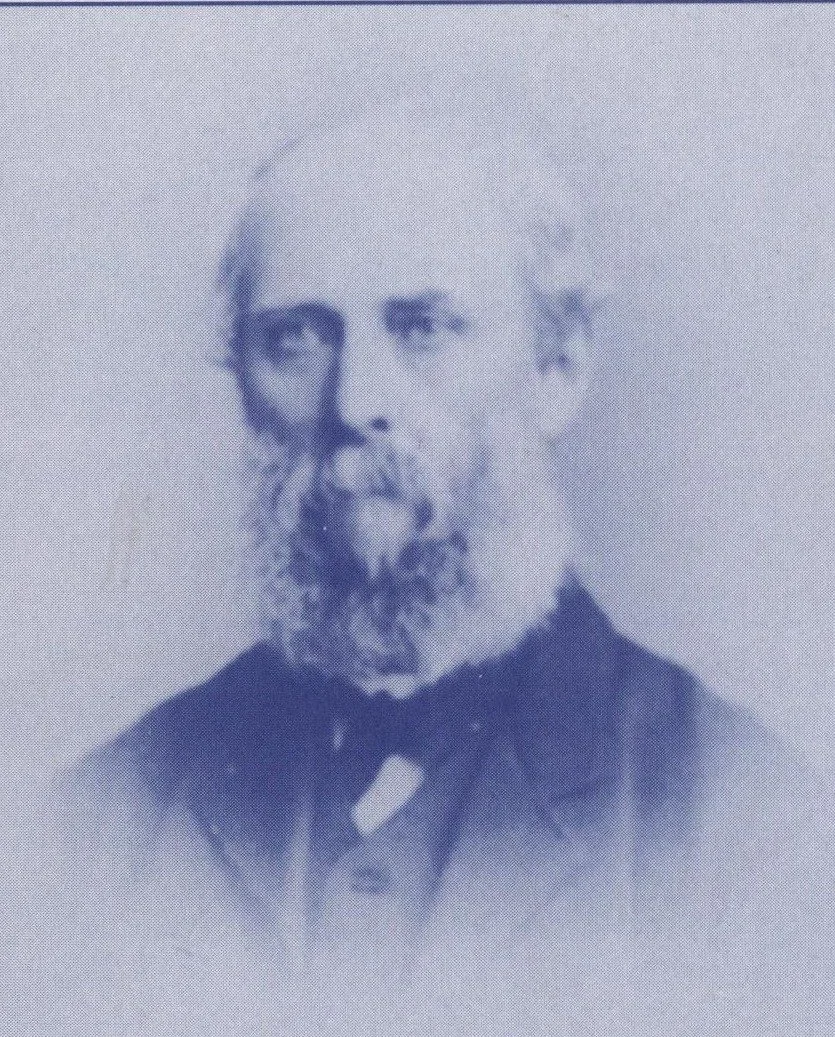
John Salter was born to John and Mary Salter in 1825 at North Tawton, a small town in mid Devon situated about six miles north east of Okehampton, and on the northern edge of Dartmoor. It seems that early in his childhood his father went away to sea and was not heard of again. John's marriage certificate dated 1857 records that his father was deceased and that he had been a cooper by trade. Apparently John together with his mother and his sister Ann were supported by William Salter, his uncle, who farmed at Cottle's Barton, an Elizabethan mansion built in 1567. The Barton may still be seen from the Crediton to Okehampton road about a mile south of North Tawton where the road bridges the River Taw.
In the course of time, John went to work on the farm and there is a family tradition that while tending the sheep he proved more adept at drawing them than minding them. In any case, his artistic talent was recognised at an early age and in the 1840's he went to London to study drawing and engraving at the offices of Henry Vizetelly, whose entry in Benezit reads ‘he was considered to be one of the most able woodcut artists in the country’. He contributed illustrations to the Illustrated London News, as did Salter himself, was a close friend of Emile Zola and was involved in the publication of works by French and Russian novelists.
John Salter's conversion from farmer's boy in Devon to art student in London, itself an intriguing transformation, may well have been brought about through private patronage. One of the witnesses to John's marriage in 1857 was a Mr Courtenay Clack. William Courtenay Clack was to become Rector of Moretonhampstead and his first cousin Richard Augustus Clack, himself born in Moretonhampstead, was an established artist who had trained at the Royal Academy Schools. The Clacks who were related to the Earl of Devon may well have been involved in John's training. They could certainly afford to help a young man of promise. We know little of Salter's career while in London, but he is recorded as living in Charles Street, Hoxton in 1848 and this was his address when he first exhibited at the Royal Academy. There is a watercolour of Okehampton Castle dated 1847, his earliest surviving work which was presumably executed while visiting home. Next we have a group of watercolours inscribed 1849. Mostly they are views of the neighbourhood of Cottle Barton, so 1849 is the likely date of his return to Devon. These early works, bequeathed by the artist's daughter Mary, are in the Torquay Museum's collection.
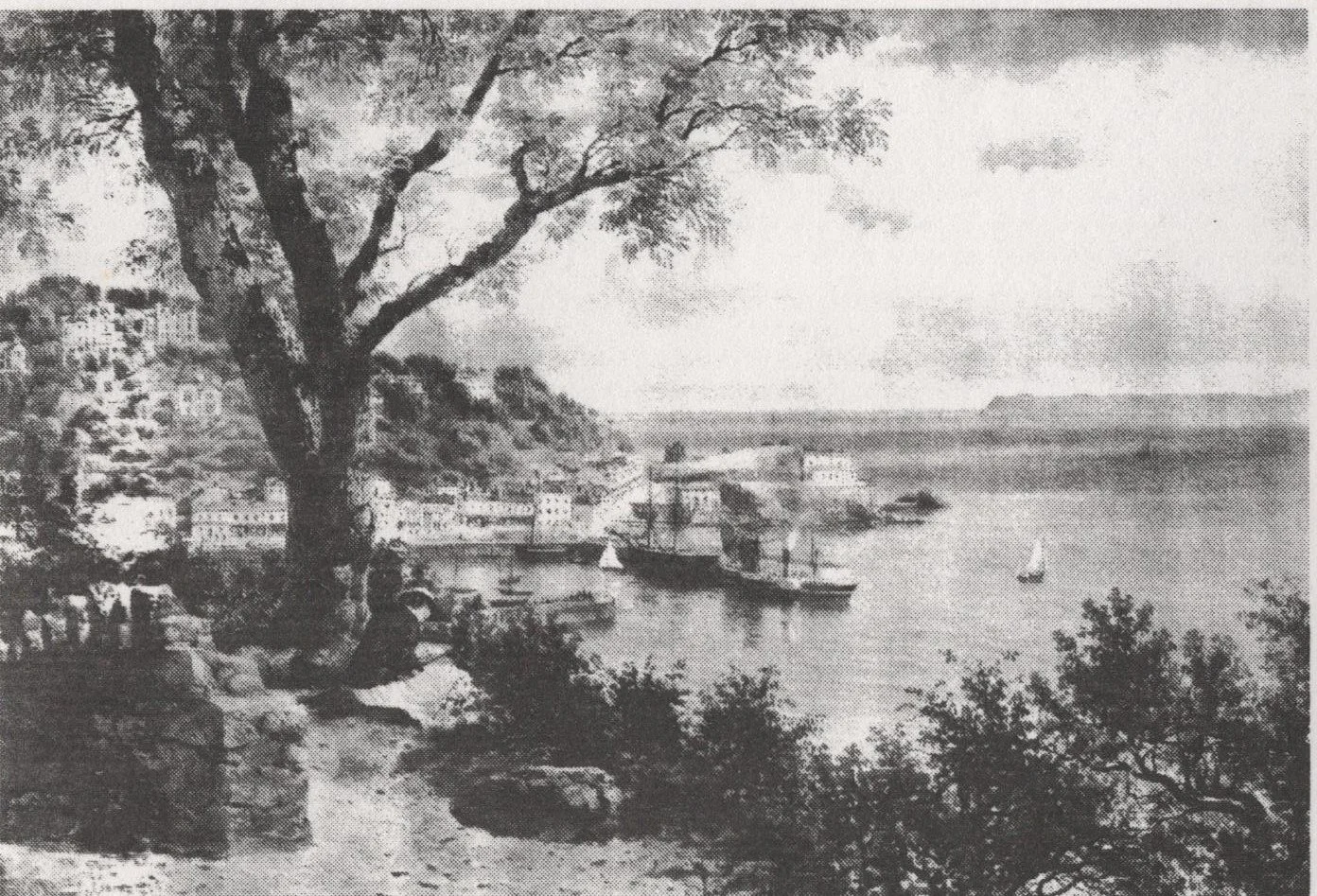
In 1850 Salter settled permanently in Torquay, and there is a picture of a local view bearing that date in the possession of a great grandson of the artist, Mr John Salter of New South Wales. There is a subsequent entry in the Post Office Directory of Devon of 1856 which records that he was a ‘Professor of Drawing’ residing at No 2 Park Crescent. In 1857 he married Elizabeth Stabb of Tormohun, the ancient parish name still applied to developing Torquay. Elizabeth was the elder daughter of John Stabb, a well to do merchant involved in the Newfoundland cod trade. After their marriage John and Elizabeth lived at Duncan House, Old Torwood Street, the home of Elizabeth's parents, and their eldest daughter Mary was born there in 1857. Later Mr Stabb experienced business difficulties which led to the family moving to a smaller house in Scarborough Road, ‘with one servant and no carriage’.
We do not know the date of the move, but by 1866 the young Salters had set up house in No 3 Lower Terrace, now known as Carlton House, The Terrace. This is now part of the offices of the solicitors Messrs Hooper & Wollen. Here John established his studio and John and Elizabeth brought up their ten children. The Salters remained on the Lower Terrace until 1890 when they moved to Romsdal, Walnut Road, Chelston, a house which has since been demolished. John may have been a sick man at the time of the move, for he died soon after in July 1891, at the age of 66. He is buried in the Torquay Cemetery and in his obituary notice which appeared in the Torquay Directory and South Devon Journal he was described as ‘a pious man, strong in his religious views who did his utmost to promote the spiritual advancement of those among whom he lived’.
He was in fact a member of the Plymouth Brethren. There is a letter from a grand-daughter, Elizabeth, in which she describes the family as ‘out of this world in temperament, Plymouth Brethren’, and another from great grandson John, ‘it is correct he belonged to the Plymouth Brethren sect and was therefore forbidden to belong to an artist's union as we would now know it in today's language’. This was almost certainly the case; we have no evidence that Salter was a member of any society of artists, and the inward looking philosophy propagated by the Brethren may explain why it has been so difficult to learn about his life, which must in any case have been devoted to his large family, his religion and to the practise and teaching of his art. Nevertheless, he exhibited twice at the Royal Academy, first in 1848, when he was only 23 years old, with A Mill on the Teign, Devon and in 1870 with The Natural Arch, Torquay. He also showed twenty one times at the Society of British Artists and at the Royal Manchester Institution.
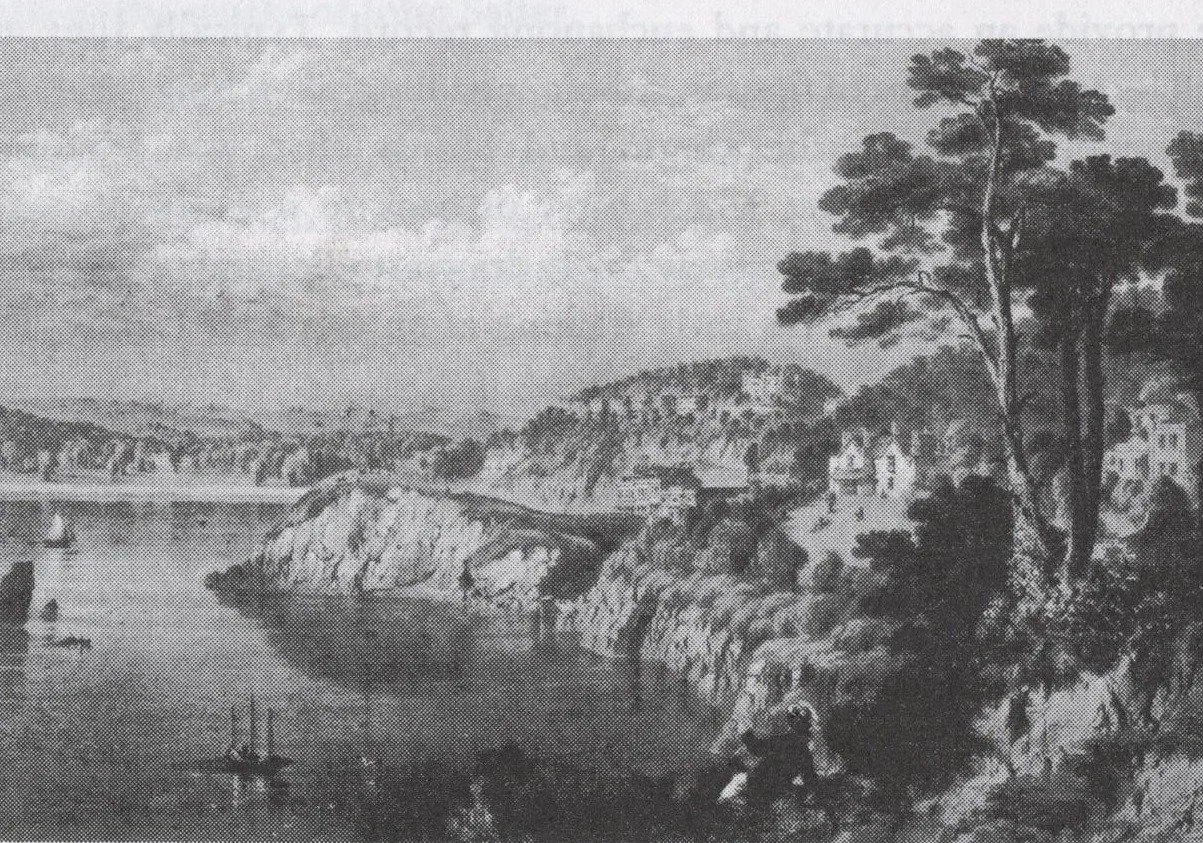
Salter painted in oils and watercolours, and was also an accomplished engraver on both stone and wood. He specialised in landscape, particularly the scenery around Torquay, Dartmoor and Mid Devon. There are also examples of other parts of the County. In 1885 a visitor to his studio reported that he saw a large number of ‘splendid views of Welsh, Swiss and American scenery’, while a great grand-daughter writing from New South Wales comments on his ‘trips abroad, at least once to Switzerland and to Norway in 1888’. She mentions ‘paintings of the Swiss Alps and Lakes, a particularly large one of the Matterhorn, of the Fjords of Norway and of Niagara’. There is a large Alpine scene in the Torre Abbey Collection.
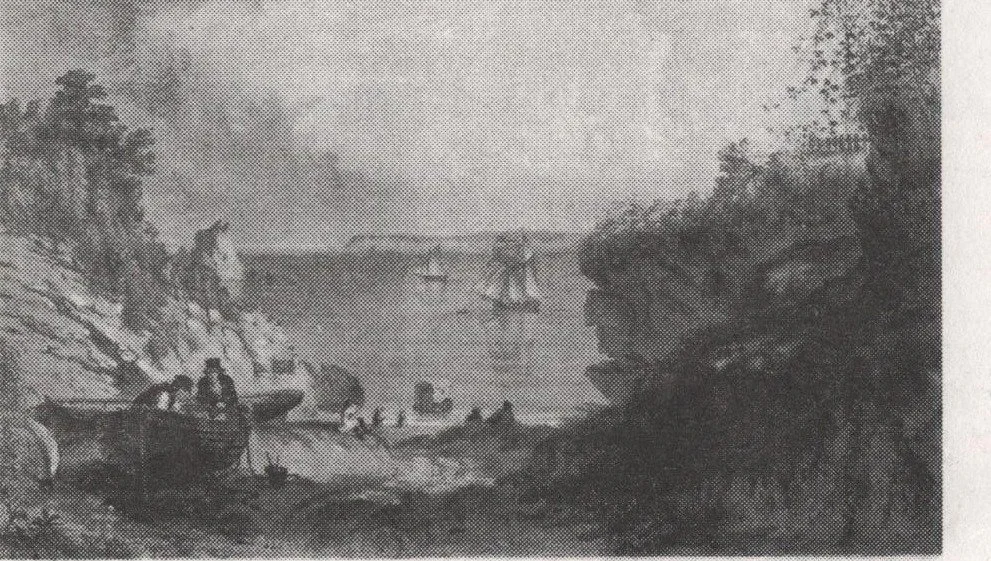
Essentially however Salter was a Devon Artist. Throughout his career he would return to his native mid Devon and to the upper reaches of the Teign and Dart. It is this series, executed over a period of some forty years, that allows us to observe his artistic development. While studying in London in the 1840's he is said to have been particularly impressed by the works of John Constable, and one can see Constable's influence in the mid Devon scenes. They also demonstrate his rapid gain in technical expertise. All but his very early works in watercolour exhibit a wide range of the devices employed by the accomplished watercolourists of the time such as stopping out, scratching out and the judicious use of body colour. But it is for his views of the Torbay Coastline that Salter is best known. These provide an accurate and enchanting record. Typically they are enlivened by small groups of figures, fishing, paddling, sketching, yachting and generally enjoying the charm and beauty that was Victorian Torquay. They are pictures which carry us back to a world of never ending sunlit summers. It is in these finely drawn studies and of course in his many lithographs that his early training as an engraver can be best appreciated.
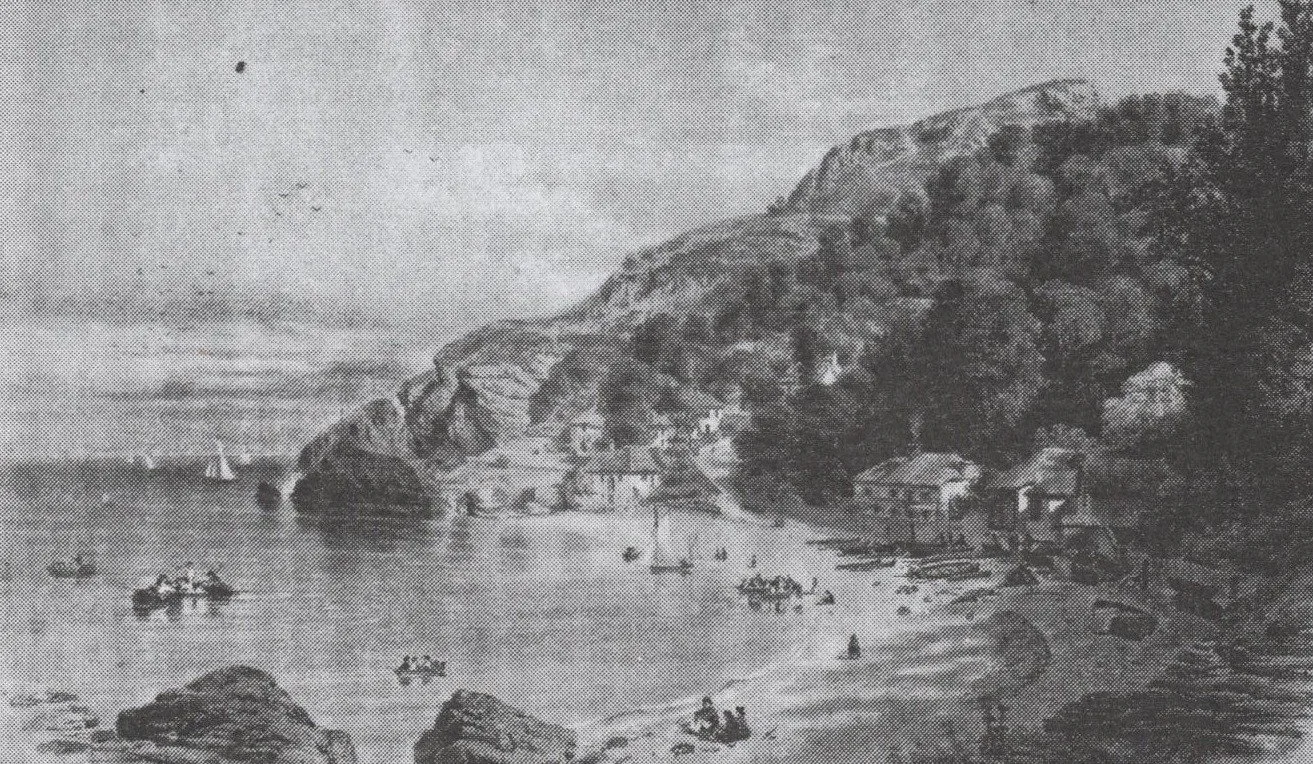
How should Salter be regarded as an artist? His drawing was utterly faithful to his subjects, and his use of colour felicitous. The composition of his pictures owed nothing to artistic license but to his remarkable powers of observation which enabled him to recognise and record the beauty and balance of his subjects. This sincerity saves his work from any sentimentality, the besetting sin of some of his contemporaries. It also renders his style instantly recognisable and individual. If he is not among the foremost of contemporary landscape artists he certainly bears comparison with them and his finest coastal landscapes are outstanding. We enjoy the Victorian and Edwardian realism of Birket Foster and Helen Allingham, partly because of the nostalgic charm of their subjects and partly because of their superb technique. We should apply similar criteria to the works of John Salter.
Salter was a man of strong religious views who once experienced doubts as to whether, as a mere artist, he was fulfilling the intentions of his God. Surely to grant such pleasure to so many is a divine gift and one must hope that in his lifetime he too came to recognise this.
The largest and most important collection of the works of John Salter is kept at Torquay Museum, which holds more than thirty watercolours, some drawings and numerous lithographs. There is also a small collection at Torre Abbey. Many of his works are in private collections, some of them being in the possession of the artist's descendants in Australia. Original lithographs as well as modern print reproductions may be bought at a number of commercial galleries in the area.
The Plaque
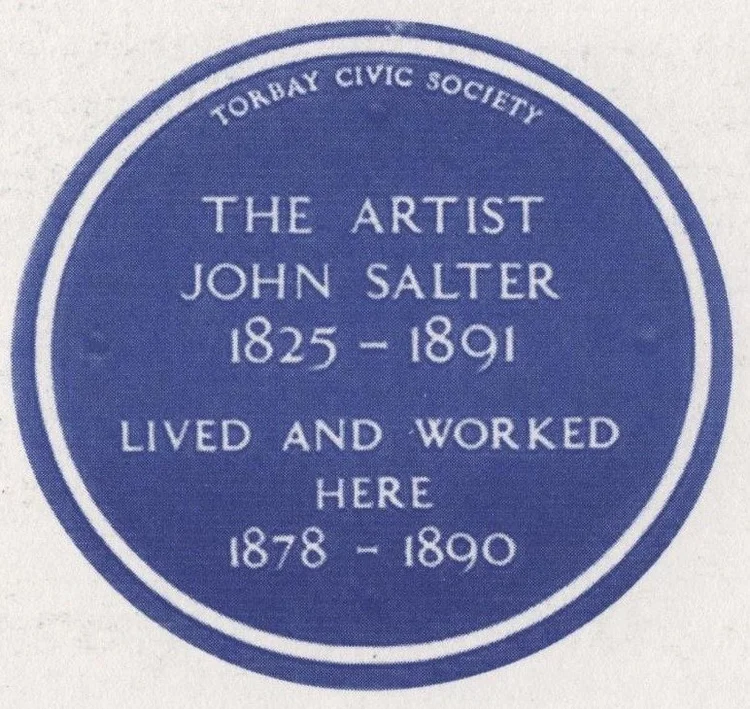
The plaque is affixed to the front wall of the offices of Messrs Hooper and Wollen at Carlton House, The Terrace, Torquay. Carlton House is situated at the lower end of The Terrace on the right hand side.
The Plaque Inscription
Torbay Civic Society. The artist John Salter 1825 to 1891 lived and worked here 1878 to 1890.
Where to See Examples of John Salter's Work
- Torquay Museum
- Torre Abbey
Acknowledgement
The Torbay Civic Society gratefully acknowledges the sponsorship of the plaque by Torquay Museum, Torre Abbey, Messrs Hooper & Wollen and a group of private collectors, and the help of the Torquay Museum and Torre Abbey. The photograph of John Salter is reproduced courtesy of Mr John Salter of New South Wales, the lithographs courtesy of Torquay Museum, and the watercolour of Torquay Harbour courtesy of Birbeck Gallery, Torquay.