
Torbay Civic Society
Beverley Nicholsand Cleave Court
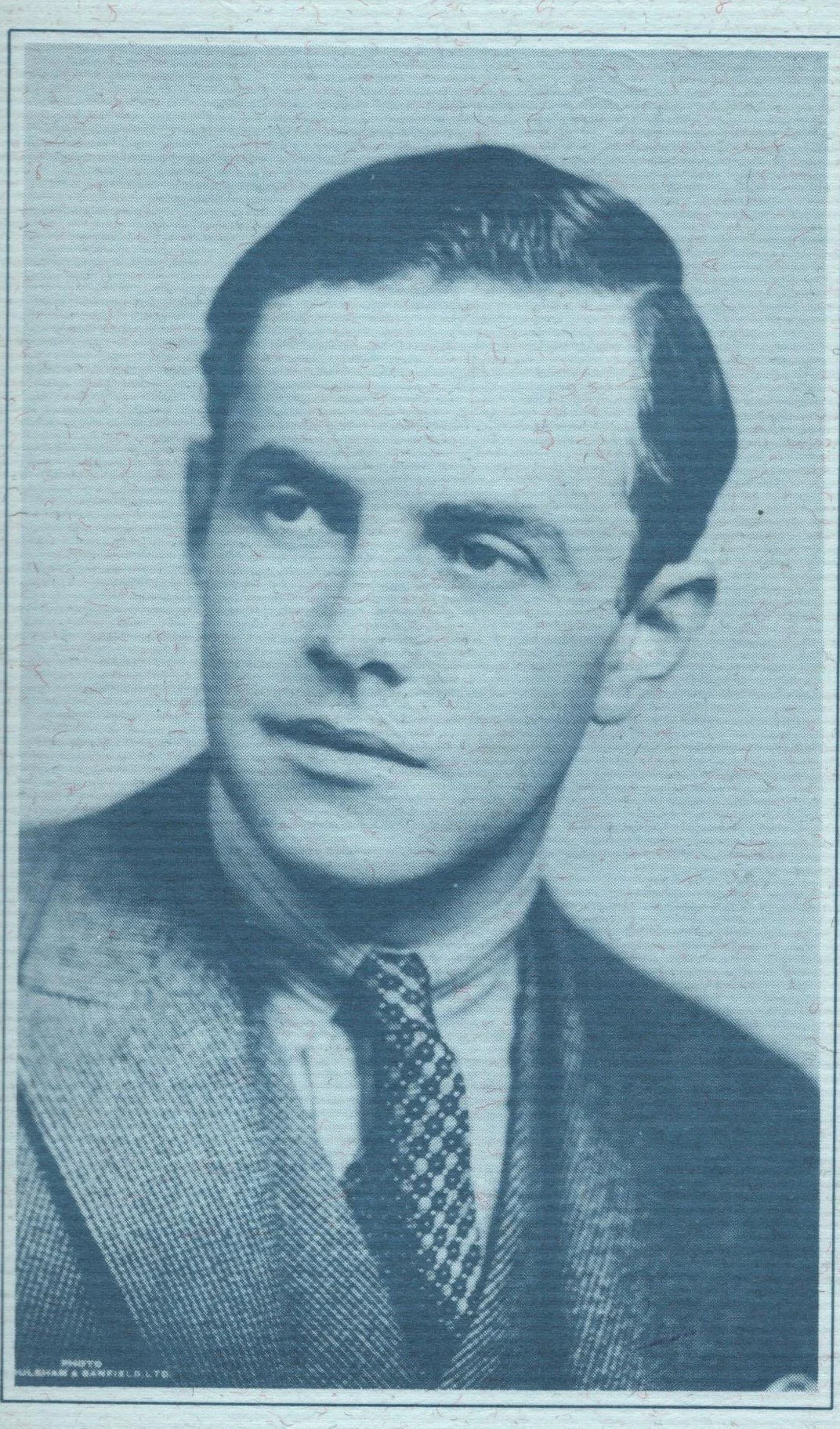
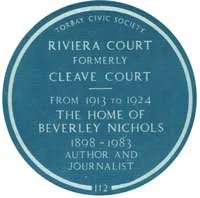
Cleave Court was one of five hundred or so large villas built in the days of Queen Victoria on the sunlit slopes of the Lincombes and Warberries. This was the exclusive residential area of the early Torquay.
Cleave Court was a quite typical Victorian villa, and it had a quite typical history, except for one thing. From 1913 to 1924 it was the family home of a brilliant, entertaining and popular writer, who wrote a succession of best sellers in the years between the wars.
Kanescombe, as the house was originally called, was built in 1839 as a private home. In 1870 John Spencer Meade added a library, a smoking room and a servants’ hall. It was requisitioned by the War Department in 1944, and it housed the Ministry of National Insurance from 1949 to 1955. In the 1960’s it was turned into flats, initially under the name of Gay Court, a name which was later changed, such is the current of our times, to Riviera Court.
Beverley Nichols first came to Torquay in 1905. He attended Wellswood Preparatory School for the Sons of Gentlemen. (It is now Grantham Hall, on the corner of Ridgeway Road and Lincombe Drive.) He was 14 when his father, a Bristol solicitor, bought Cleave Court in 1913.
Beverley Nichols gives an account of his life as a child and young man in Torquay in his autobiography Father Figure and also in The Unforgiving Minute. They make absorbing reading and may owe as much if not more to his gifts as a story-teller than to a meticulous respect for accuracy in every detail.
If we are to believe him his father spent several days in every fortnight recovering from acute bouts of alcoholism, and this pattern continued until the day of the mother’s death, at which point he became as permanently sober as he had previously been permanently alcoholic. His account of his neighbours is similary startling. With Beverley Nichols Torquay, or should we say life altogether, is never dull.
Throughout his brilliantly successful career he never seems entirely to have forgotten Torquay. At Oxford he became President of the Union, editor of The Isis, and founder-editor of The Oxford Outlook. He published his first novel, Prelude, at the age of 22. Prelude, he wrote, “will rather terrify Torquay in parts. I shall probably be banished from the town by the Lord Mayor”. (He wasn’t banished, and even in those days Torquay didn’t have a Lord Mayor. Ed.)
While Beverley was an undergraduate his vacations at Cleave Court seem to have consisted of tea parties, dances, ‘a gramophone hop’ (as they called disco dancing in the twenties), a New Year levee and tennis on the court below the terrace. He describes the visiting cards left in a bowl on the hall table. But things were changing even in those days. A boarding house had appeared in Lower Warberry Road and though he refers to its cloistral seclusion, he observes that a note of colour is creeping into the domestic scene. Their ‘treasure’, he observes, is serving at dinner in a plum-coloured uniform, and not plain black as formerly. But for us today some of his remarks have a familiar ring. Torquay, he wrote, was lush, muggy and abounding in the rich, the eccentric and the elderly.
If he did not rate an entry in the Oxford Companion to English Literature, he was a remarkably intelligent, versatile and entertaining author who wrote with gloss and polish on an usually wide range of subjects. He captured the spirit of the years between the wars. He was always readable, whether he was doing his weekly column for the Sunday papers, helping to make horticulture a national passion by describing his garden in Down the Garden Path, writing the script for Cochran’s 1930 revue, discussing pacifism in Cry Havoc, or expatiating on the question of independence for India Divide and Quit in Verdict on India.
When he was 83 someone asked him what he thought of Torquay, “I have about 100,000 memories,” he replied, “but not the strength to recall them.” He died in 1983 at his home, Sudbrook Cottage, Ham Common, Richmond.
Research: Joan Mason-Martin, M.A. (Oxon)
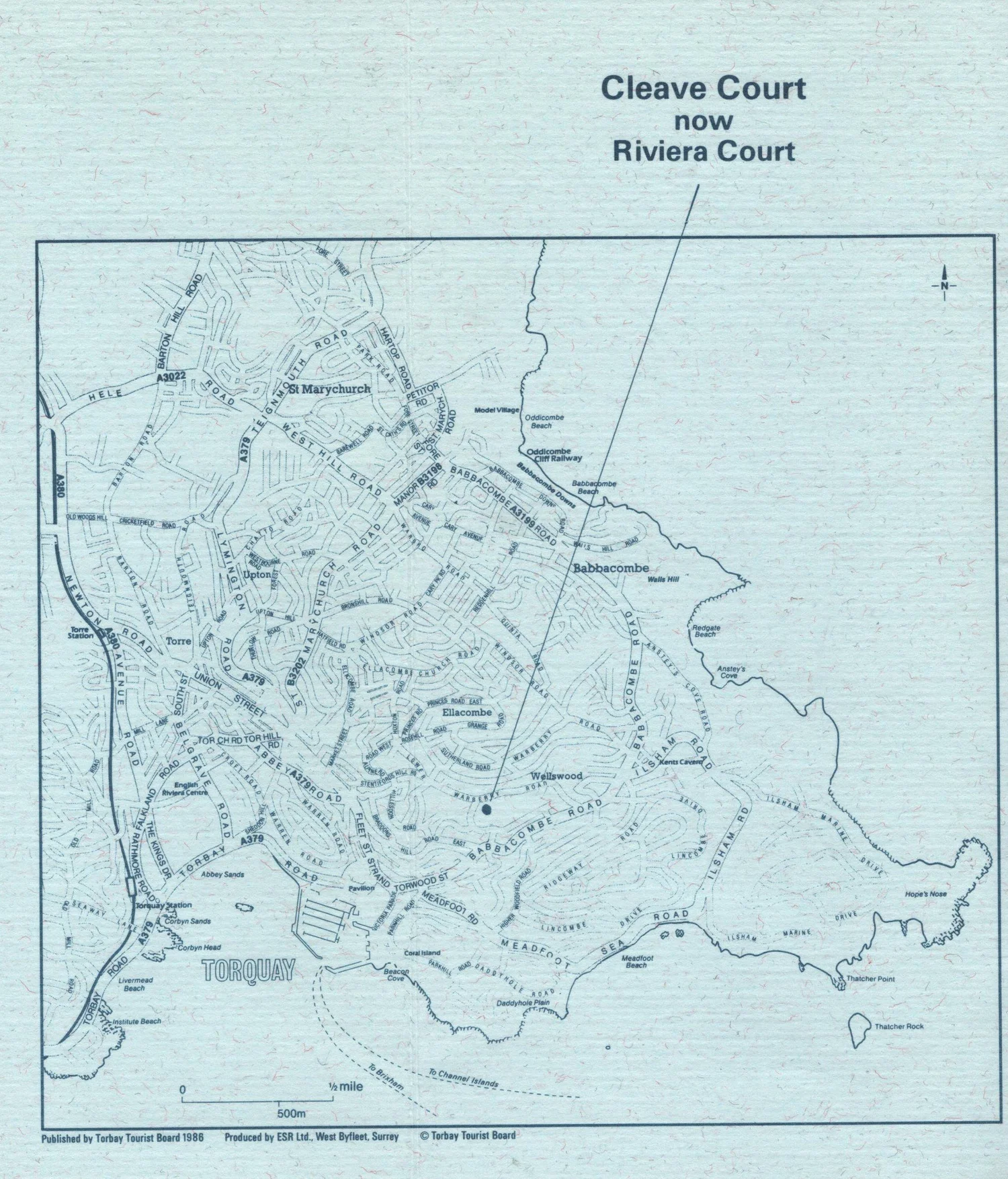
This is one of a series commemorating notable people, buildings and events in the history of Torbay, prepared by the Torbay Civic Society with the approval of the Torbay Borough Council. The plaque appears on the building or boundary wall adjoining the road. The leaflet gives more information about the person, building or event. The notelet shows where to go and what to read for further information.