
Torbay Civic Society
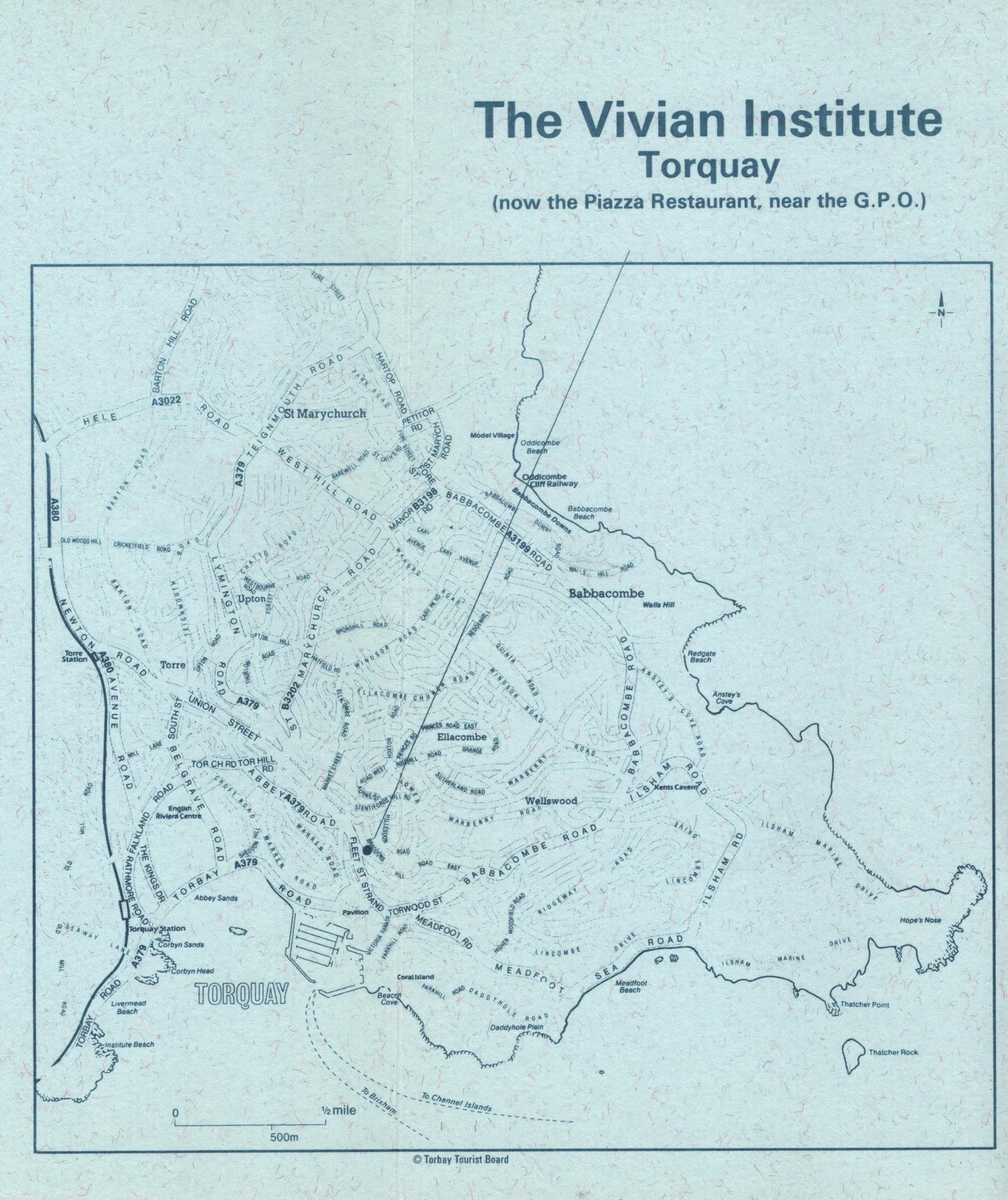
The Vivian InstituteTorquay (now the Piazza Restaurant, near the G.P.O.)
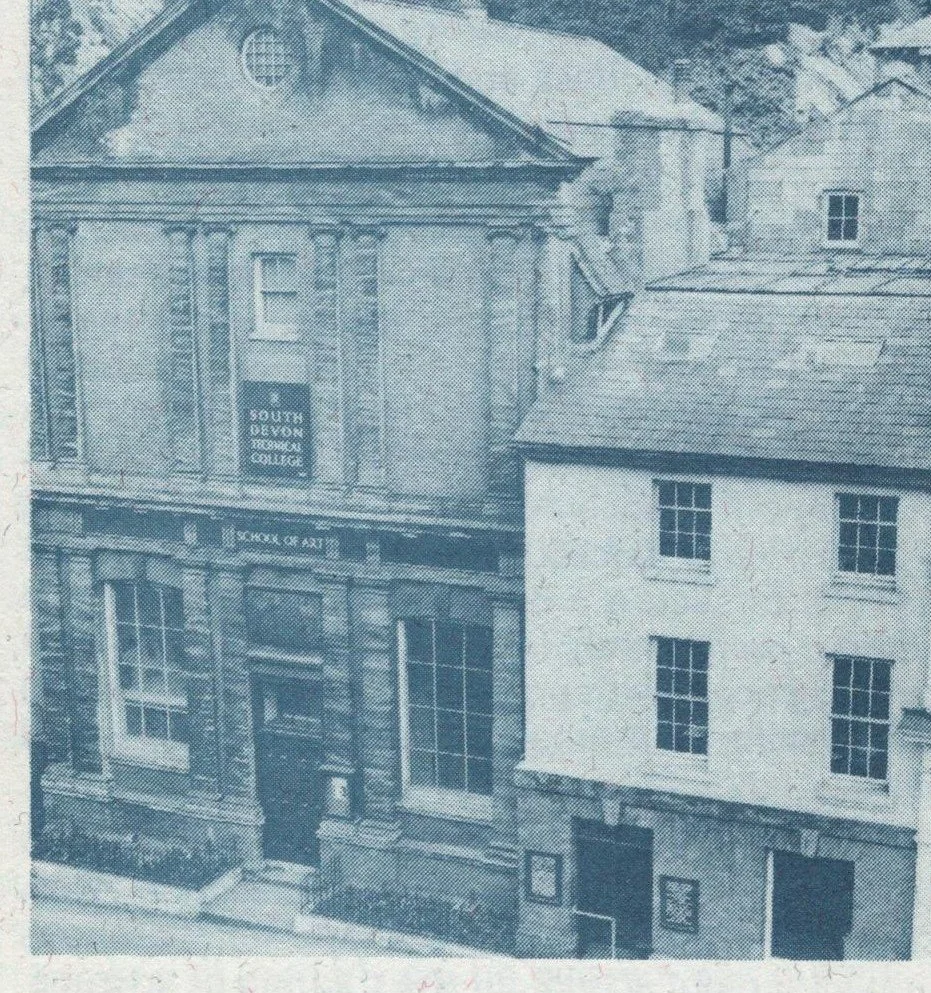
First built as the Salem Chapel by Robert Stark in 1839, this building was for nearly thirty years the home of the Starkites, a sect unique to Torquay but with a significant place in the history of nonconformity. In 1878 the building was put to another use, this time as a School of Art, and it was here that technical education had its beginnings in Torbay.
Robert Stark was born in the year 1788 in the village of Cockington “of respectable agricultural parents”. He was educated in the established church, became a lawyer’s clerk and acted as tutor to William Kitson, who virtually ran the town single-handed in its formative years. Robert Stark then went into business, becoming an undertaker, an ironmonger and an estate agent. He was for a time the Agent for the Torre Abbey Estate of the Cary family. He was a member of local government from its inception until his death.
At the age of 29 he and his wife took what was a momentous step in those days and joined the Baptist Chapel. On several occasions he was called upon to officiate as the preacher, which he did at first with reluctance and then with growing eagerness. A friend wrote: “He was exceedingly humble in his appreciation of himself... he could not imagine that he alone was right... he approached the bible with trembling awe, fearing what new thing he should discover in its pages.”
And, as might be expected, the new things he discovered caused a burgeoning of faith in some and for other people it caused difficulties, and before very long he had broken with the Baptists. Many of the congregation followed him, and he ministered to them in his living room, and, the number growing from week to week, in the Freemason’s Hall and then in such larger rooms as he could find. By 1839 the Starkites, as his followers had come to be known, had built their own Chapel, the Salem Chapel, twice as large as the original chapel they had been obliged to quit.
The beliefs of this very practical and down to earth tradesman and councillor, which he expounded in The Divinely Commissioned Ministry, were not uncontroversial. He did not believe in dogmas, creeds, sacraments, holy edifices. He did not believe in the apostolic succession, in the second coming or in the idea of eternal damnation. It was this last belief, or lack of belief, that his contemporaries found the most startling of all.
When he died in 1854 the services were carried on for many years by his deputy and faithful follower, Mr. W.C. Peckins, until this gentleman’s business failing, he was declared a bankrupt and fled to the United States to avoid imprisonment.
After the sudden departure of Mr. Peckins, the Starkite faith gradually petered out and the chapel fell into neglect. His son, J.C. Stark, in spite of his initials, showed no interest in it whatever, throwing all his energies into developing the ironmongery business and building an iron foundry. The products of that foundry can still be seen today, draining the older streets of the town, while the family name is kept before the public eye in a very different way by a very distant relative, the adventurer and authoress Freya Stark.
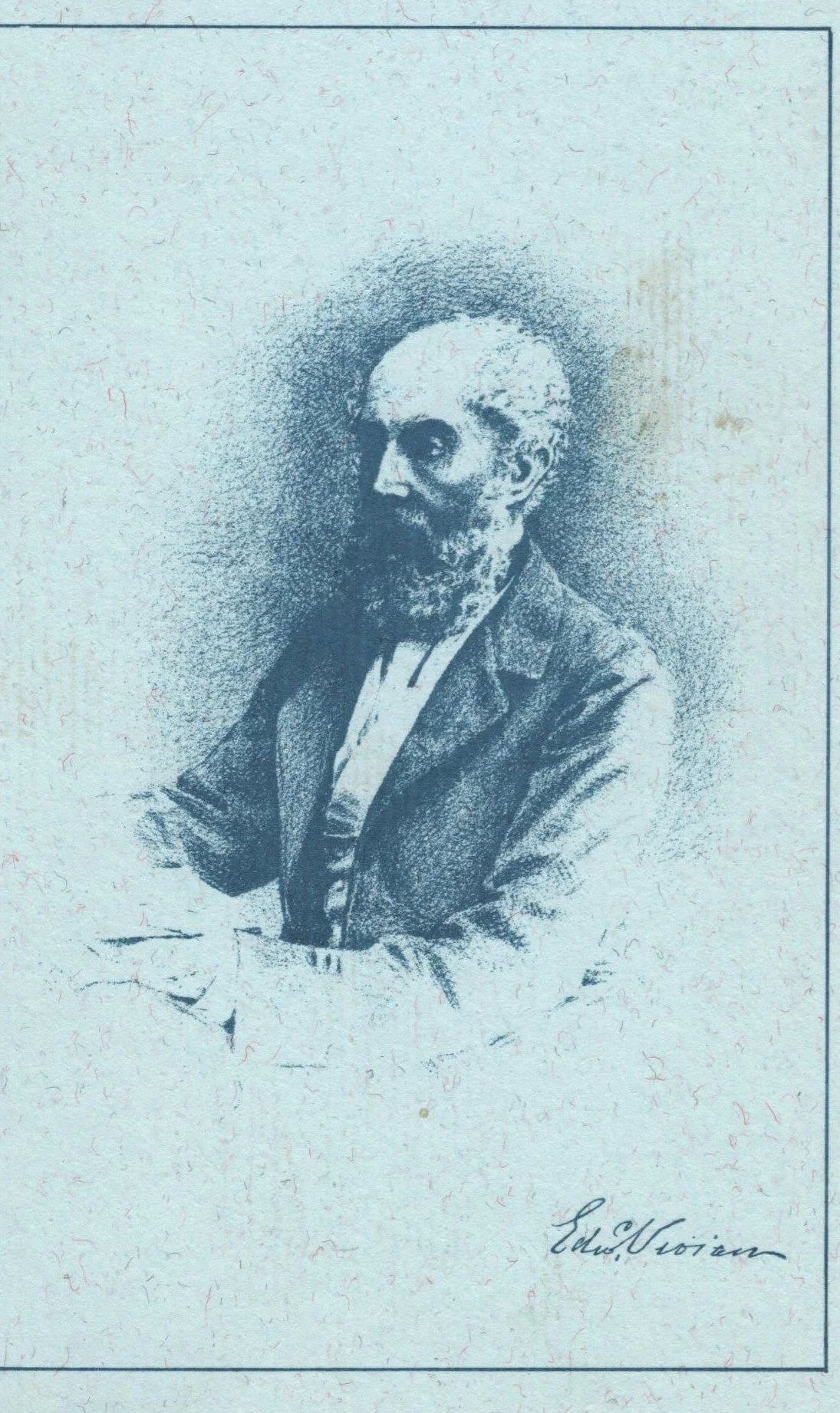
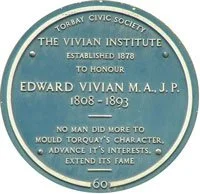
It was through the agency of a man who had served on the local council with Robert Stark that the building eventually acquired a new life and a new purpose. Of Edward Vivian it can be said that he was one of the eminent Victorians of Torquay, active in its public affairs, prominent in its learned institutions and a luminary in its social life. A nephew of Lord Vivian, he was not without private means, and these he supplemented as a banker, an insurance agent and an hotelier. He was a magistrate, a member of the Turnpike Trust, which in those days built the roads and financed them out of tolls, and he was Chairman of the Baths Corporation, a principal source of attraction for the elegant tourists who flocked into the town.
But today he is respected and admired chiefly for his efforts on behalf of the poor. A contemporary wrote:
“This gentleman has at all times, and frequently at great inconvenience to himself, been ever ready to lend his assistance to anything and everything that has a tendency to elevate the moral and intellectual condition of the working classes.”
His first concern was to attack the evil of drunkenness, grievously acute when drink was cheap and sold everywhere without restriction and when the working man was usually without the comforts of a home or any form of recreation. He founded the Temperance Society and maintained a continuing interest in its work. But he was not intolerant and always respected the views of others.
He campaigned year in and year out for the provision of public baths and wash houses, and it astonished us today that it took so long for him to achieve his modest ends in this direction. He sought to attack the problem of the hunger of the working classes by encouraging them to grow their own food.
But it was the educational needs of working people to which he attached the greatest importance and it was here that he achieved his most lasting results. For years he lectured in the Mechanics Institute, assisted with various Mutual Improvement Societies and Reading Room schemes, and backed the many unsuccessful attempts to secure a public library. Eventually he came to realise that first priority was to provide working people with practical training in work and leisure skills at a time and at a price they could afford.
The result was the Institute for the Promotion of Science and Art, opened in this building in 1878. It was perhaps a rather grand title for what was in effect a night school for the training of artisans. Its main provision was evening classes in plumbing, joinery, carpentry, plastering, pottery and metalwork. A student enrolled at a cost of two shillings a month, and for this he got three classes a week each lasting two hours. The proprieties of Victorian class segregation were nicely observed, for while the school was open to all, the sessions in the afternoon, on rather different subjects, cost seven and sixpence a month, and in the morning the fee rose to the astronomical sum of fifteen shillings.
If a building is important for the effect it has had on the lives of ordinary people, this building, which came to be known as the Vivian Institute, is as important as any in Torquay. It was indeed still used for vocational and adult education as part of the South Devon College of Arts and Technology until the early 1980s. All that remains now is the facade. But the facade tells of the success of the school and of the regard in which Vivian was held during his lifetime. When the town sought for an appropriate way to commemorate the Diamond Jubilee of Queen Victoria in 1887, it was agreed that the School should be enlarged and the cost of adding a second storey be met by public subscription.
Research: Frank Cawson
About this series
This leaflet, and the plaque, is one of a series commemorating notable people, buildings and events in the history of Torbay, prepared by the Torbay Civic Society.